
One of my fondest memories of my lola is learning to make sinigang while I was in college, cooking for myself for the first time and feeling homesick.
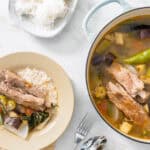
My pork sinigang sears spare ribs first and uses a homemade tamarind paste that you stir in a spoonful at a time, so you decide exactly how sour it gets. Serve it with a big bowl of steamed rice!
If you love comforting Filipino pots like this one, try my arroz caldo, beef kaldereta or ginataang gulay next.
Save This Recipe! 💌
Jump to:
- Why Make This Pork Sinigang Recipe (Sinigang na Baboy)?
- Ingredients
- Choosing Your Sour for Pork Sinigang (Fresh Tamarind, Paste or Sinigang Mix)
- How to Make Pork Sinigang (Step by Step)
- How to Make Tamarind Paste for Sinigang
- What to Serve with Pork Sinigang (Steamed Rice and More)
- How to Store and Make Ahead
- Isabelle's Tips for Tender Pork Sinigang (and a Broth You Can Sour to Taste)
- Did you try this recipe?
- Pork Rib Sinigang with Fresh Tamarind
Why Make This Pork Sinigang Recipe (Sinigang na Baboy)?
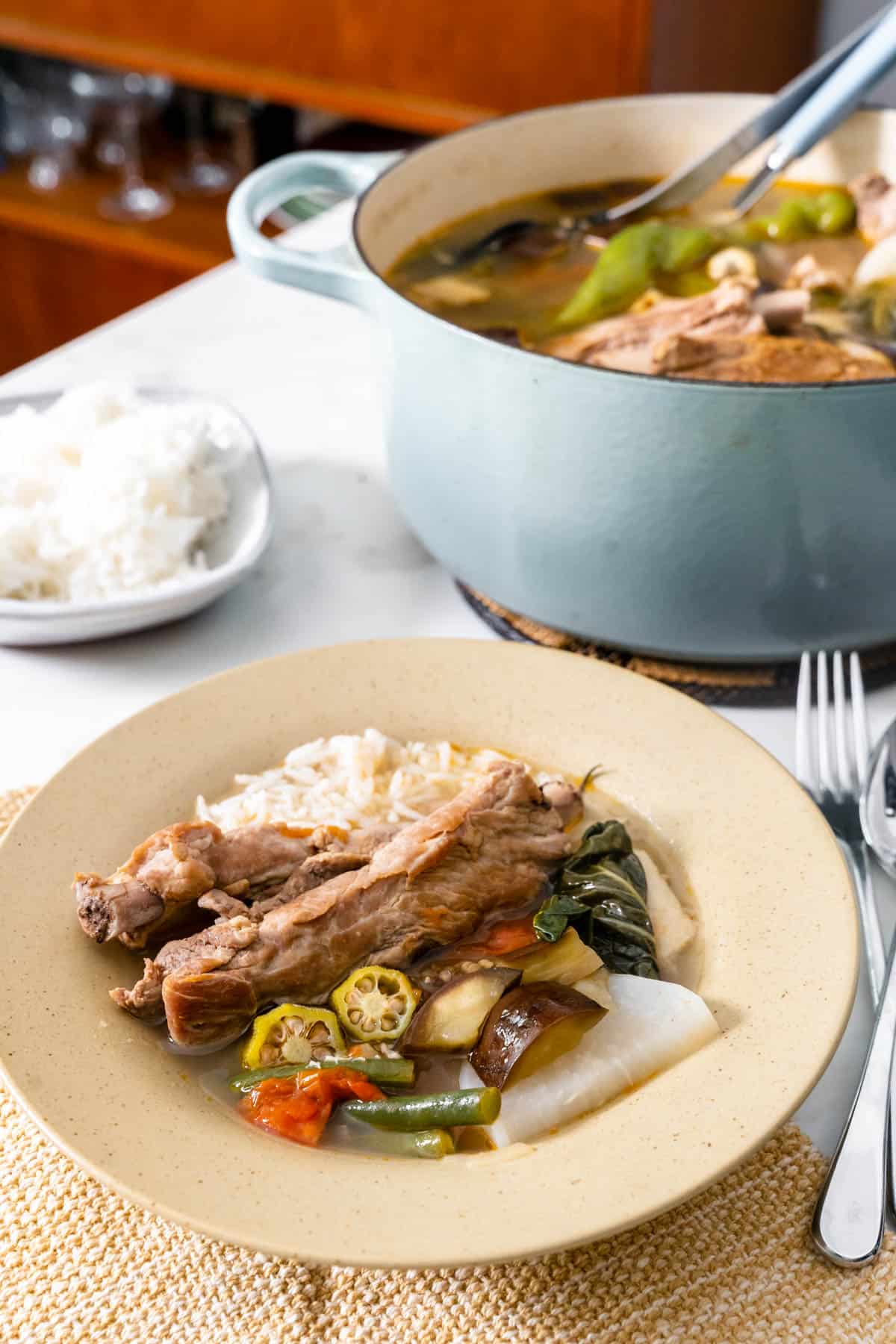
Pork Sinigang (Sinigang na baboy) is a Filipino sour soup made with pork, tomatoes, onion and vegetables in a tamarind broth, served with steamed rice. Here is what makes my version worth the pot:
- I use pork ribs: the bones flavor the broth, and the ribs cook long enough to become super tender. They almost fall off the bone!
- I sear the ribs first: The browned bits give depth of flavor to the broth.
- I use real tamarind to sour the broth: If you're able to get your hands on real young tamarind, I'd suggest using this as a sour agent for the broth!
Ingredients
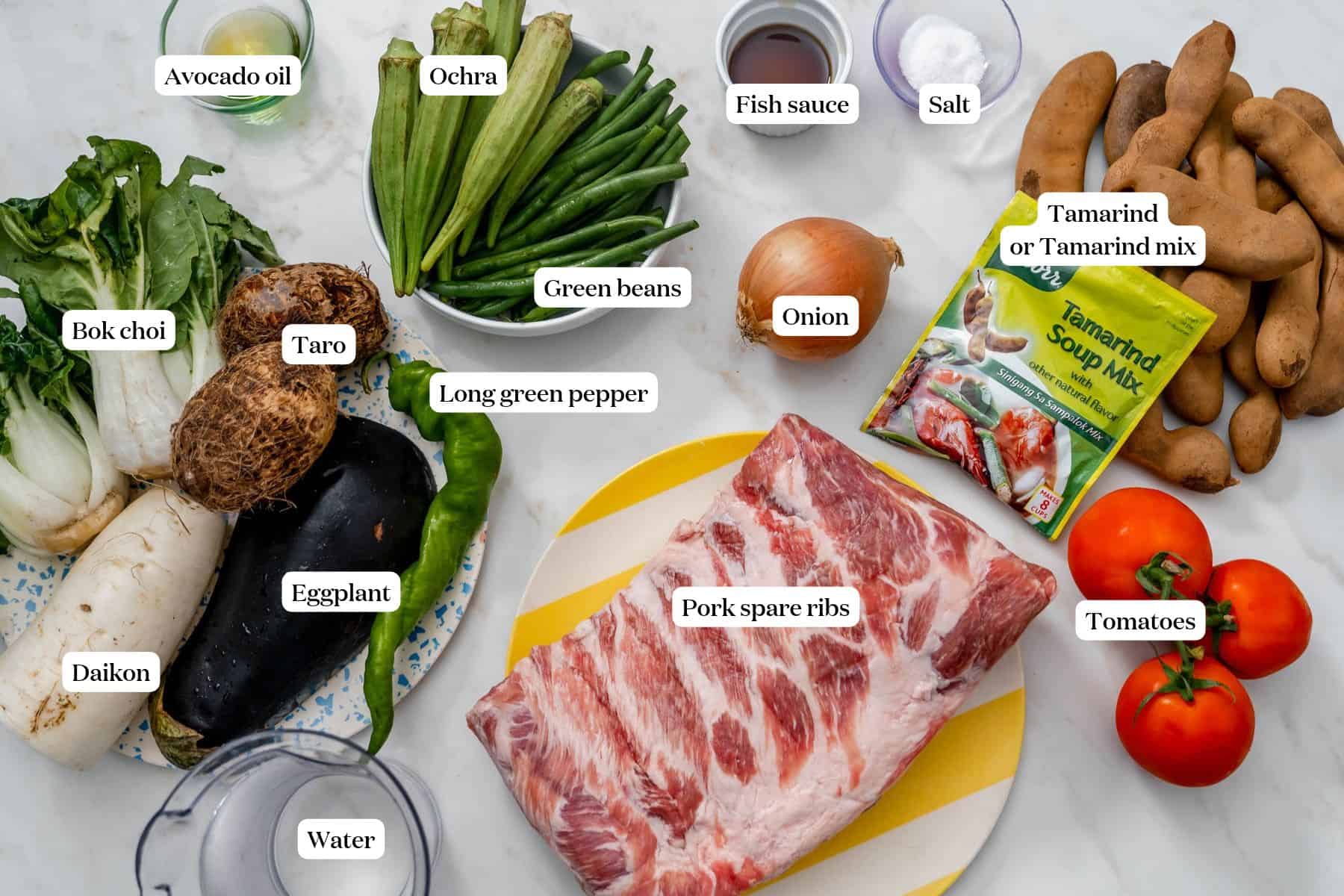
- Pork spare ribs (3 lbs): The bones give the broth body, and ribs stay juicy through a long simmer. Pork belly works too. It is richer and cooks faster.
- Onion and Roma tomatoes: Cooked down until jammy, it's the base of the broth.
- Fish sauce: It seasons the broth instead of plain salt. Any fish sauce works.
- Taro: One of my favorite vegetable ingredients in sinigang! The starch of this vegetable also thickens the sauce. But if you can't find it, it's no big deal.
- Daikon: It soaks up the broth and stays slightly crisp-tender. Look for it in most grocery stores.
- Okra, green beans and eggplant: These are all optional, so add, swap or leave out any of them. Yard long beans are the traditional choice, but green beans work just as well. For the eggplant, Chinese eggplant is more traditional, and globe eggplant works too.
- Bok choy: It goes in last and wilts in a minute or two. Spinach works if that is what you have. Kangkong (water spinach) is a more traditional choice and if I had access to it I would use this!
- Long green pepper (optional): A long green chili adds a mild pepper flavor.
- Tamarind paste or sinigang mix: What gives sinigang its signature taste! Sinigang mix is the shortcut if you are short on time or can't find young tamarind.
- A different protein: You can make seafood sinigang with salmon or shrimp, or beef sinigang.
*See recipe card below for full list of ingredients and quantities.
Choosing Your Sour for Pork Sinigang (Fresh Tamarind, Paste or Sinigang Mix)
The souring agent is what gives sinigang that signature flavor. I add it near the end, after the vegetables, so I can taste and adjust. Adding it late means the vegetables have already released their water, so what you taste is what you serve. My Lola said it also doesn't stain the vegetables as much if you add in later.
Sinigang can also be soured with other fruit, like guava, kamias, batwan, etc. Those are worth trying if you can find them, but they are not tested in this recipe.
| Souring option | Flavor | Effort | How much to use |
| Homemade tamarind paste | Has that sour tamarind fruit flavor | 30 minute soak, then mash and strain. It's an extra few steps | 4 to 6 tbsp. Start with 3 tablespoon and add to taste. |
| Sinigang mix (packet) | Has a concentrated sourness and other seasonings but has coloring and preservatives | Very easy and accessible. Open packet and stir it in. | 1 to 1½ packets. Add a little at a time. |
How to Make Pork Sinigang (Step by Step)
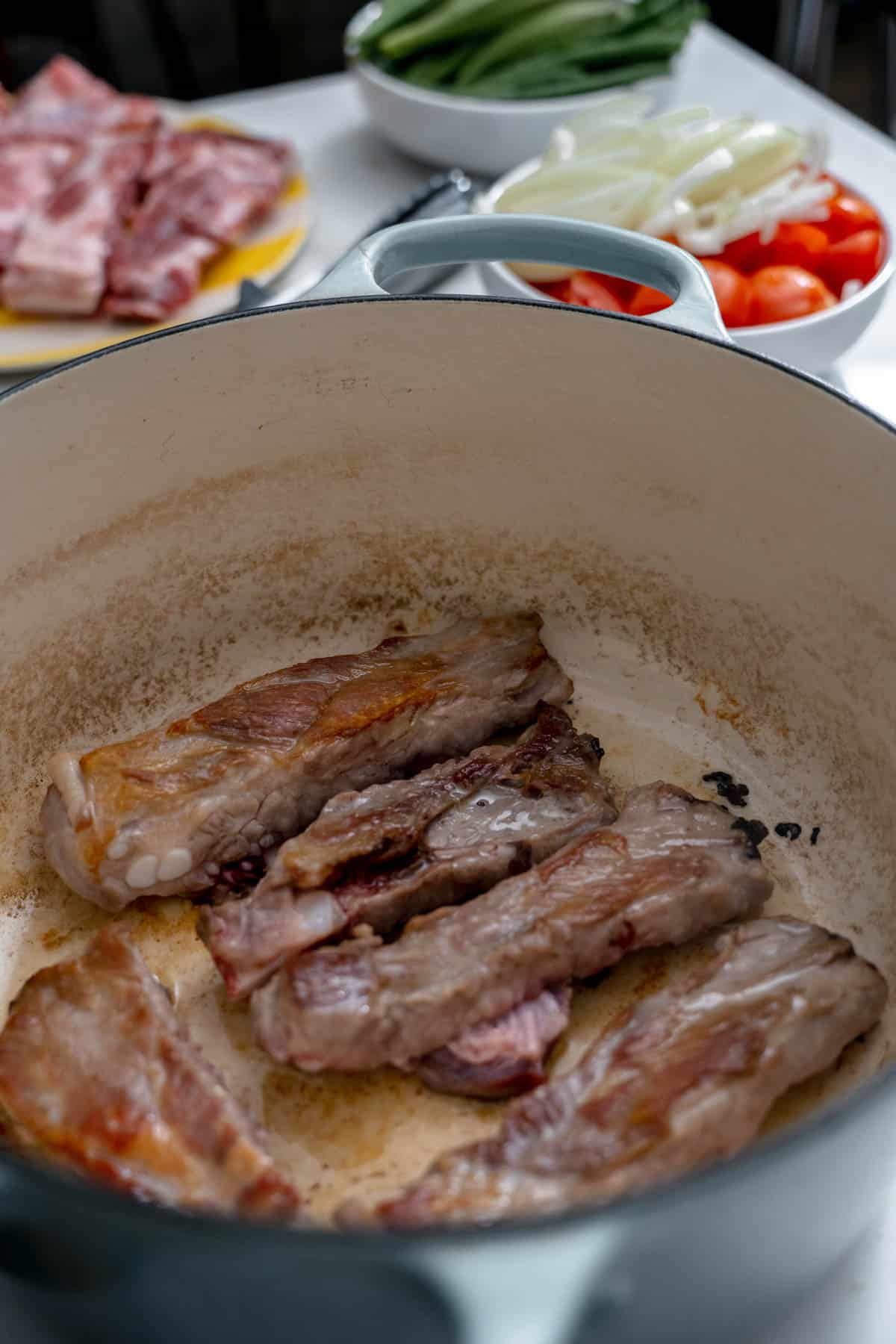
- Season and sear the ribs: Pat the ribs dry with paper towels, then season all over with the kosher salt. Heat the oil in a large heavy pot over medium-high heat. Sear the ribs in batches, in a single layer, 3 to 4 minutes per side, until deeply golden brown. Crowding the pot steams the meat instead of browning it, so take your time. Move the ribs to a plate and leave the browned bits in the pot, because they flavor the broth.
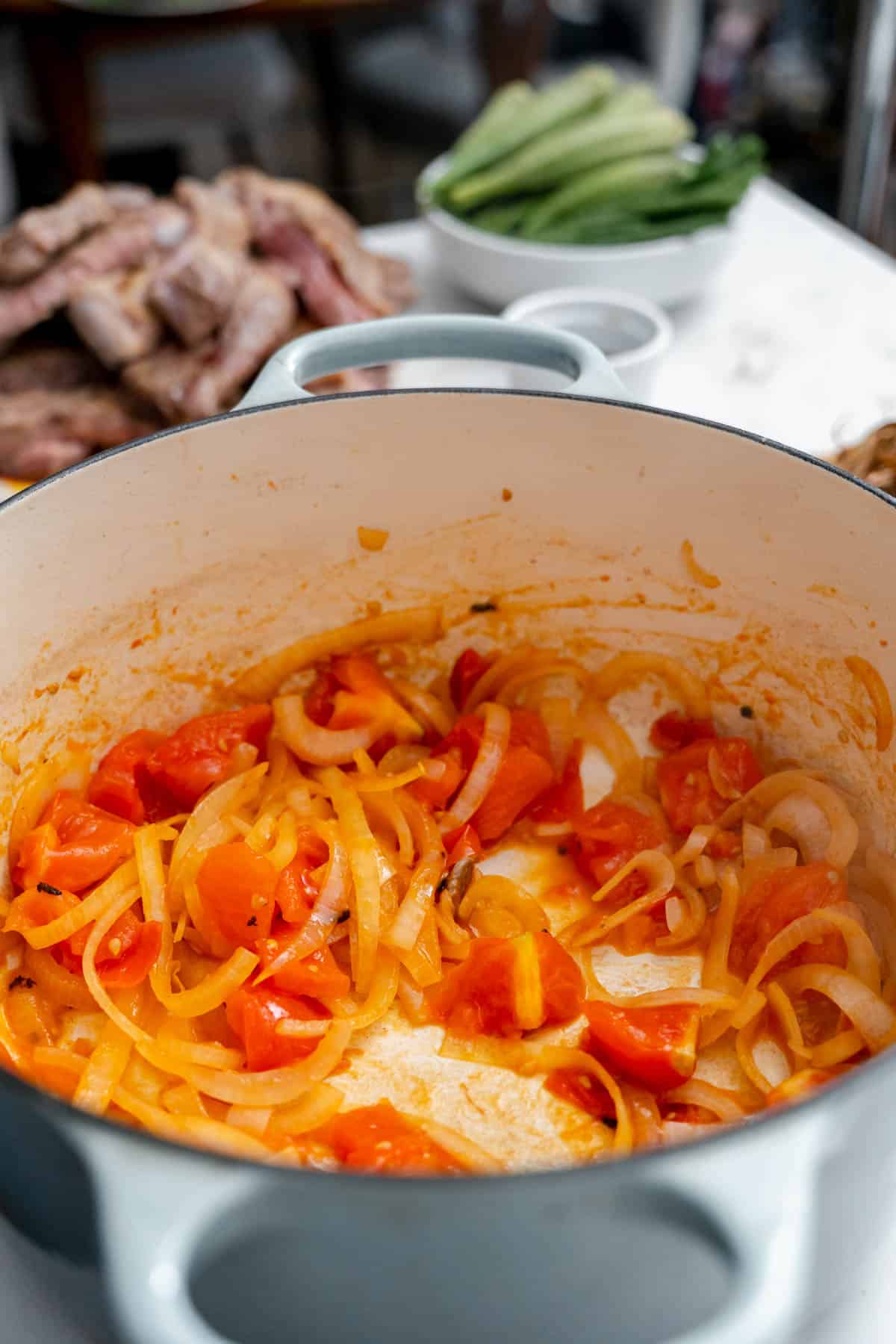
- Cook the onion and tomatoes into a jammy base: Lower the heat to medium and add the sliced onion and the quartered tomatoes. Cook about 10 minutes, scraping up the browned bits from the bottom of the pot with a wooden spoon, until the onion is soft and the tomatoes have broken down into a thick, jammy mixture. This is the base of the broth.
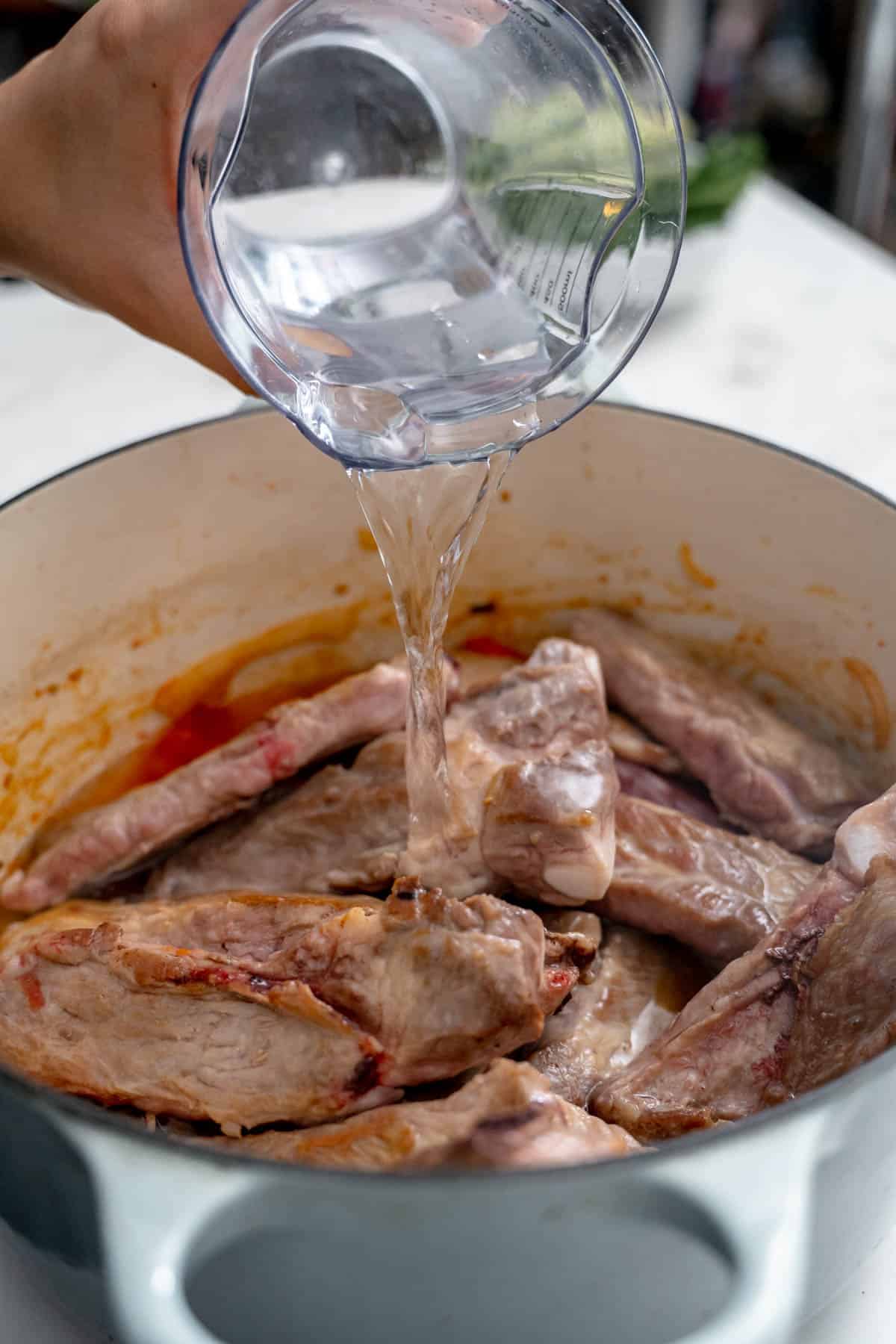
- Simmer the ribs until tender: Return the ribs and any juices from the plate to the pot. Add the fish sauce and enough water to cover the pork by 1 inch (about 8 to 10 cups). Bring to a boil, and skim off the foam that rises to the top so the broth stays clean. Reduce to a gentle simmer then cover and cook for 60 to 75 minutes. The ribs are ready when a fork slides into the meat easily and it starts to pull away from the bone. This is the point where you can stop and chill the pot to finish the next day.
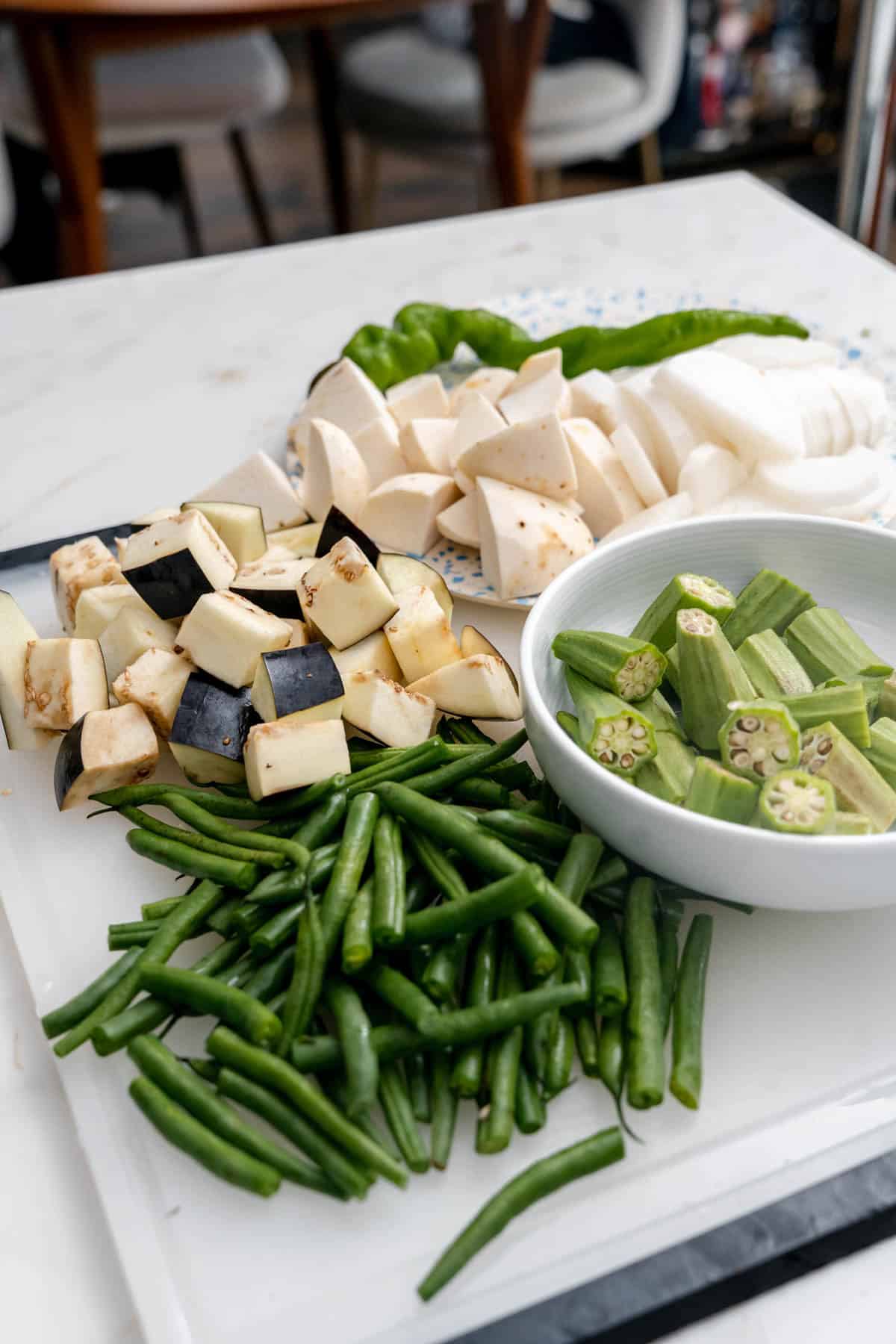
- Prep the vegetables and the tamarind while the pork simmers: Start the tamarind paste if using (see the tamarind paste steps below). Cut the vegetables to the sizes in the recipe, and set each group on a plate in the order it goes into the pot: taro and chili, daikon, okra and green beans and eggplant, then bok choy.

- Add the vegetables in order: Add the taro and the long green chili (if using) and cook 10 minutes, until a fork slides into the taro easily. Taro takes the longest, and it softens the broth into something slightly thicker. Add the daikon and cook 5 minutes. Then add the okra, green beans and eggplant and cook 10 minutes. Add the bok choy last and cook 1 to 2 minutes, until it is just wilted and still bright green.
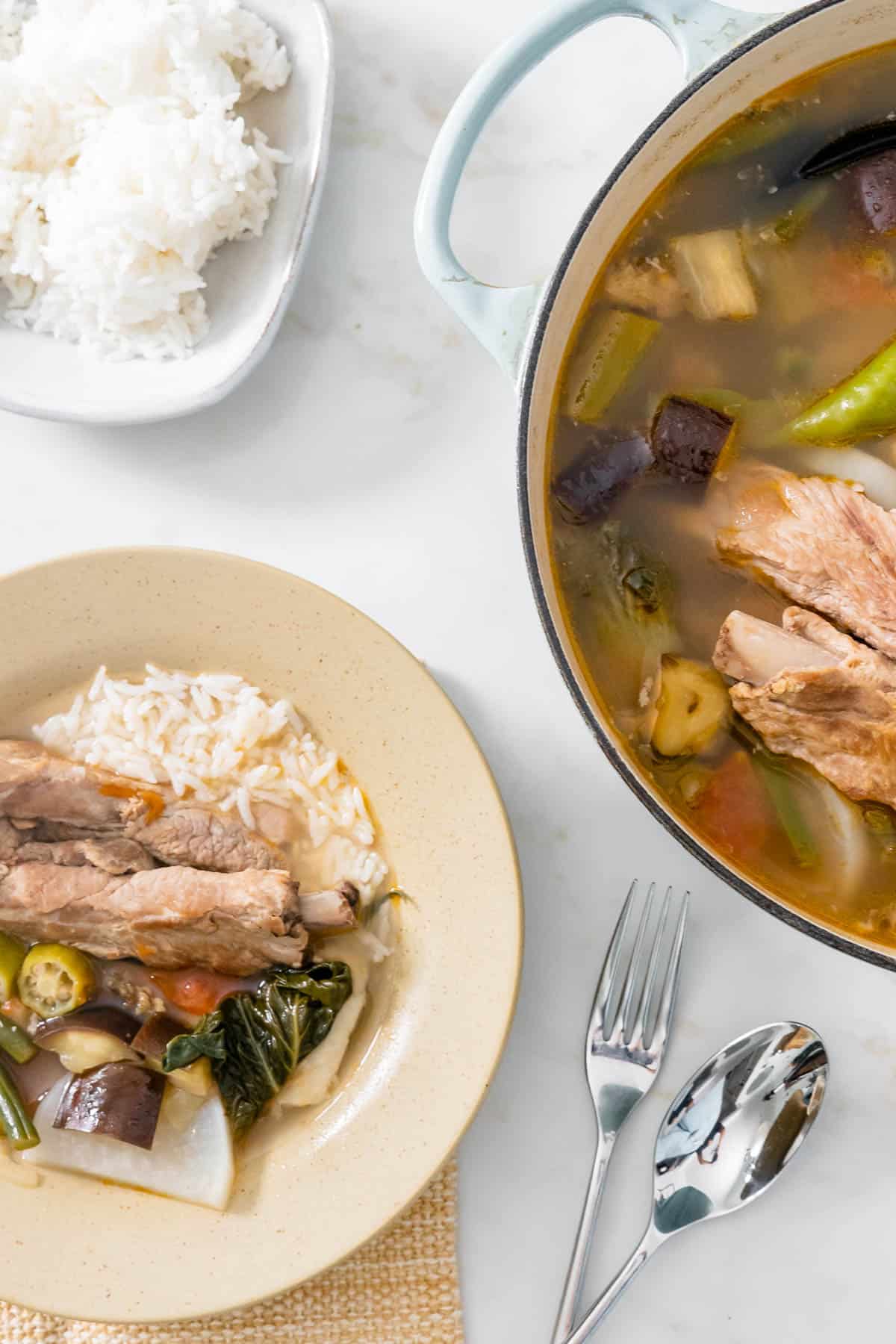
- Stir in the sour, a little at a time: With the heat on low, stir in 3 tablespoons of the tamarind paste (or the sinigang mix). Give it a minute, then taste. Keep adding, up to the full 6 tablespoons of paste, until the broth is as sour as you like. Adding the sour last means the vegetables have already released their water, so what you taste is what you serve. Taste once more and adjust with fish sauce. If the broth tastes flat instead of sour, it usually needs fish sauce, not more tamarind. Ladle the ribs, vegetables and broth into deep bowls and serve hot with steamed rice.
How to Make Tamarind Paste for Sinigang
This is the step that makes the soup taste like yours, so it gets its own section. Start it while the pork simmers. I adapted it from Hungry Huy.
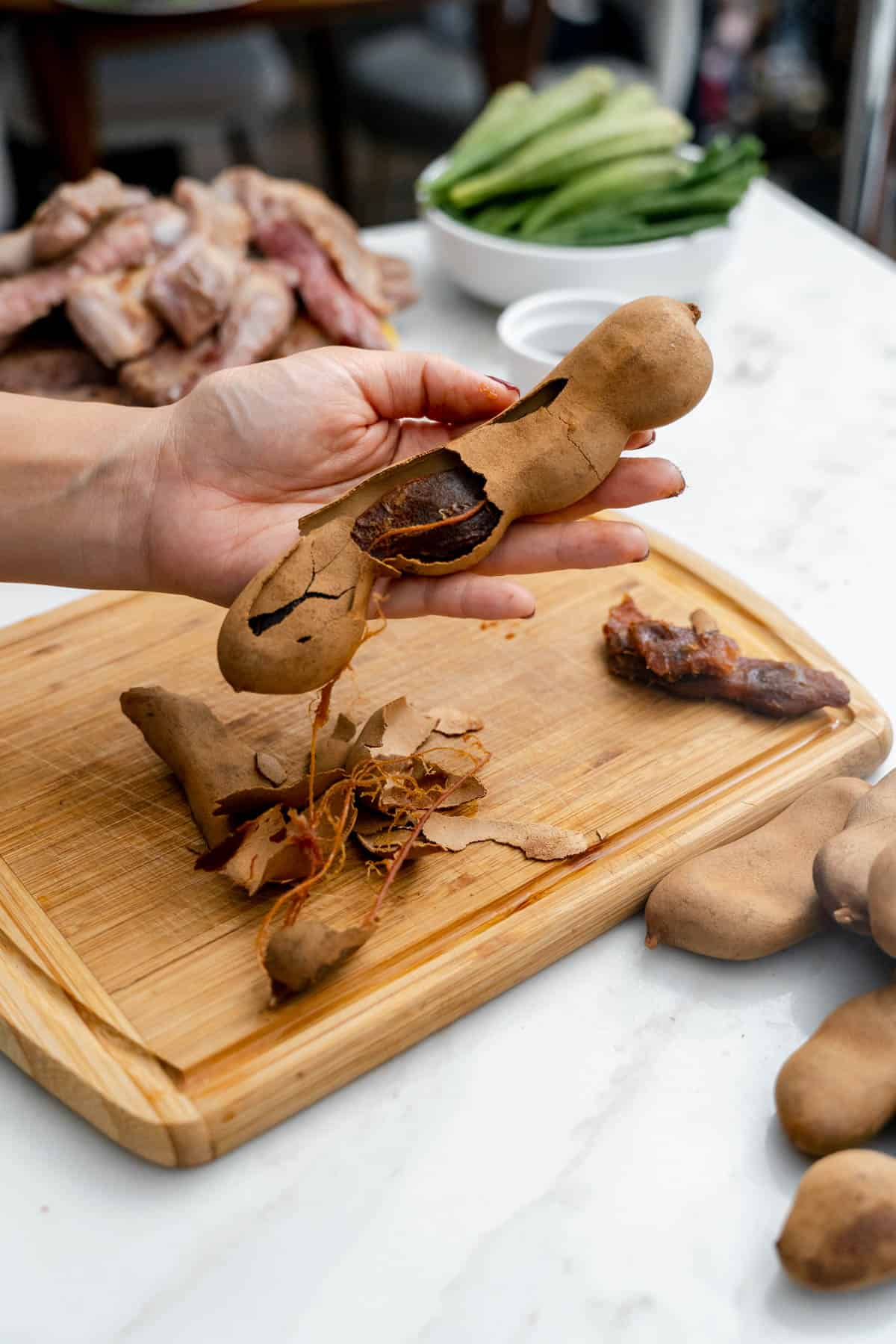
- Crack open 12 young fresh tamarind pods and pull out the flesh. Remove the shell and the tamarind veins. Put the flesh in a bowl and pour 1 cup of boiling water over it. Let it soak for 30 minutes, until the flesh is soft and the water has cooled.

- Massage the pulp with your fingers to separate it from the seeds and fibers. Strain through a fine mesh sieve, pressing so all of the pulp goes through. Discard the seeds and fibers.
What to Serve with Pork Sinigang (Steamed Rice and More)
Steamed jasmine rice is the one thing sinigang needs. My favorite way to eat sinigang is to scoop some rice into my bowl of soup.
If you are feeding a crowd, put it next to beef kaldereta , lumpiang shanghai, and beef salpicao.
How to Store and Make Ahead
To make ahead, cook through step 3 up to 1 day in advance. Chill, lift off the solid fat, reheat, and finish with the vegetables 20 minutes before serving. Keep leftovers in an airtight container in the fridge for up to 3 days, and reheat gently on the stove so the taro and vegetables do not overcook.
Isabelle's Tips for Tender Pork Sinigang (and a Broth You Can Sour to Taste)
- Pat the ribs dry before searing to get that nice sear. Also sear in batches, and give each rib room.
- Skim the foam early for a cleaner broth. I love using this skimmer spoon.
- Add the sour last and a little at a time. It is easy to add more and hard to take it out.
- Stagger your vegetables so they all finish cooking at the same time.

Did you try this recipe?
Would love to hear what you think by leaving a comment below and sharing it on Instagram, Facebook, or Pinterest!
Thanks so much!
Isabelle
Pork Rib Sinigang with Fresh Tamarind
Equipment
- Large heavy-bottomed pot or Dutch oven
- Slotted spoon or fine-mesh skimmer
- Medium bowl
- fine mesh sieve
- Skimmer spoon
Ingredients
Pork sinigang
- 3 pounds pork spare ribs cut into individual ribs
- 2 teaspoon kosher salt
- 1 tablespoon neutral oil
- 1 medium yellow onion sliced
- 2 tomatoes quartered
- 3 tablespoon fish sauce plus more to taste
- 8-10 cups water enough to cover the pork by 1 inch
- 12 ounces small taro about 2 taro, peeled and cut into 1½-inch chunks
- 5 ounces daikon peeled and cut into ½-inch half-moons
- 5 ounces okra about 5-8 pieces, stems trimmed, left whole or chopped 2 inch pieces
- 5 ounces green beans cut into 2.5-3-inch pieces
- 8 ounces eggplant 1 to 2 Chinese eggplants, or half of a globe eggplant, sliced 1 inch thick on a diagonal
- 2 bunches of bok choy halved (or 2 cups spinach)
- 1 long green chili optional
Homemade tamarind paste
- 12 young fresh tamarind pods make sure they are sour and not sweet
- 1 cup boiling water
To serve
- Steamed jasmine rice
Instructions
- Pat the ribs dry and season with the salt. Cut the ribs across the bone. Heat the oil in a large heavy pot over medium-high heat. Sear in batches, 3 to 4 minutes per side, until golden brown. Set aside.
- Lower the heat to medium. Add the onion and tomatoes and cook about 10 minutes, scraping up the browned bits, until soft and jammy.
- Return the pork and any juices to the pot. Add the fish sauce and enough water to cover by 1 inch. Bring to a boil and skim the foam. Reduce to a gentle simmer, cover, and cook 60 to 75 minutes, until tender.
- Meanwhile, prep the vegetables make the homemade tamarind paste (if using see below for instructions).
- When pork ribs are fork tender, add the taro and the long green chili (if using) and cook 10 minutes, until fork-tender. Add the daikon and cook 5 minutes. Then add the okra, green beans and eggplant and cook 10 minutes. Add the bok choy and cook 1 to 2 minutes, until just wilted.
- Stir in 3 tablespoons tamarind paste (or sinigang mix). Taste and add more until it is as sour as you like. Adjust with fish sauce. Serve hot with steamed rice.
Homemade tamarind paste (start while the pork simmers)
- Crack open the pods and pull out the flesh. Remove the shell and the tamarind veins. Place the flesh in a bowl and pour the boiling water over it. Let it soak for 30 minutes, until the flesh is soft and the water has cooled.
- Massage the pulp with your fingers to separate it from the seeds and fibers. Strain through a fine mesh sieve, pressing so all of the pulp goes through. Discard the seeds and fibers.
Save This Recipe! 💌
Notes
- You can make ahead by cooking through step 3 up to 1 day in advance. Chill, lift off the solid fat, reheat, and finish with the vegetables 20 minutes before serving
- Store leftovers in an airtight container in the fridge for up to 3 days.




Leave a star rating and review, ask a question, or share a tip!