
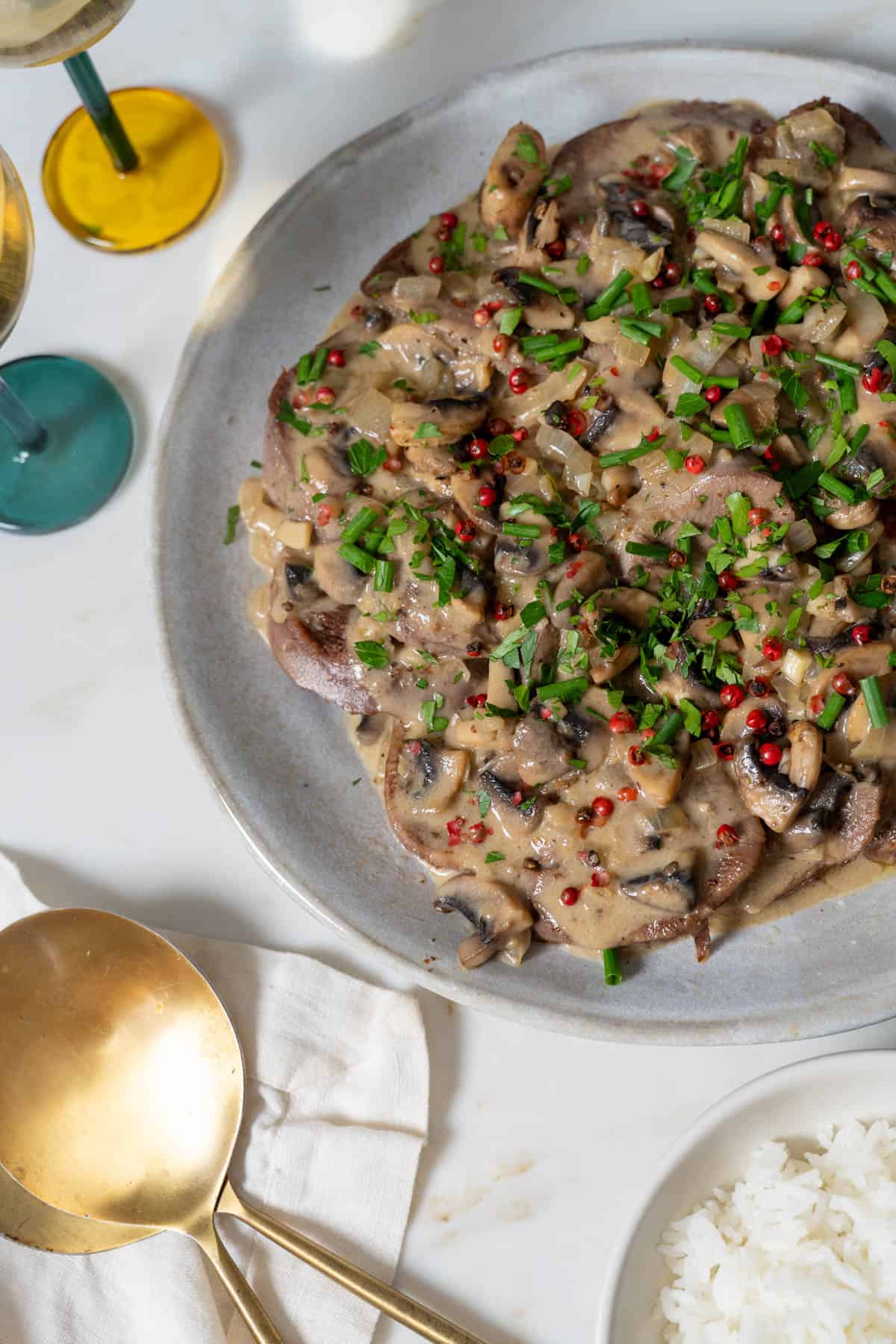
Beef lengua is easily one of my favorite dishes my mom makes. I know ox tongue sounds daunting, and I get that not everyone wants to cook it at home. But once it's sliced and covered in mushroom sauce, it looks like tender braised beef. And if you've had Filipino Beef Lengua (a dish with Spanish roots), you know how incredibly tender and comforting it is.
It's the kind of slow-cooked, special occasion dish that shows up on our table alongside Beef Kaldereta, always with a big bowl of white rice or garlic rice (sinangag) to soak up the sauce. My relatives ask my mom to make it for every special occasion and holiday, and I've eaten it more times than I can count. It is a labor of love, but I'll break it down step by step so you can make it with confidence.
(And if you love beef and mushrooms but want something quicker, my Beef Salpicao is ready in under 30 minutes!)
Save This Recipe! 💌
Jump to:
Three Generations of Our Family's Beef Lengua
This recipe started with my Lola (grandma), who made it for special occasions in Manila. My mom tweaked it over the years, then taught it to me, and now I'm passing it on to you!
Here's the thing about family recipes though. They're rarely written down and my Lola and mom would usually say "just cook it until it's soft" or "you'll know." So I had to make this numerous times in my kitchen to get the timing and sauce consistency right, so you don't have to guess!
Notes on Ingredients
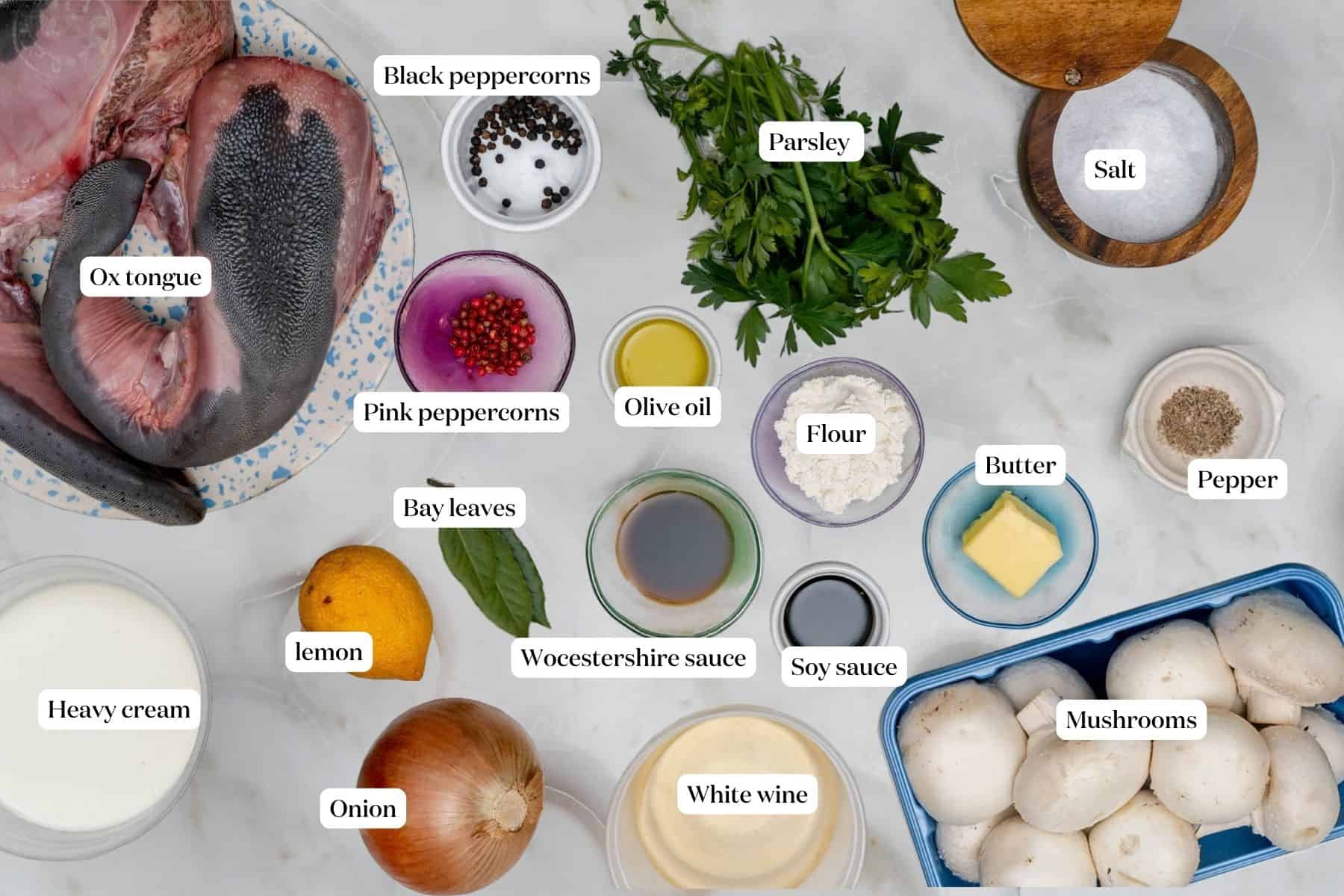
- Beef tongue (ox tongue): Look for one that's about 2 to 3 pounds. Most butchers carry it, often frozen. If it's frozen, thaw it in the fridge overnight before cooking.
- Lemon: Scrubbing the tongue with lemon helps clean the surface. This is how my mom has always done it.
- Aromatics (onion, garlic, black peppercorns, bay leaves): These flavor the tongue while it simmers and turn the cooking water into a flavorful broth that becomes the base of your sauce. Don't throw it out! You can freeze any extra broth and use it later for soup.
- Mushrooms: I use cremini or white button mushrooms. Fresh mushrooms brown better and give the sauce a meatier texture than canned. You can also use shiitake.
- White wine: Adds acidity and depth that keeps the cream sauce from tasting heavy. Use a dry white you'd drink (Sauvignon Blanc or Pinot Grigio work great).
- Soy sauce and Worcestershire sauce: Our umami backbone. Soy sauce is the Filipino touch, and Worcestershire adds a savory tang.
- Heavy cream: Gives the sauce its silky body.
- Pink peppercorns: Our family's finishing touch. Despite the name, they aren't true peppercorns. They're dried berries with a mild, peppery, slightly sweet flavor. Find them in the spice aisle at your grocery store. They're related to cashews, so skip them if anyone at your table has a nut allergy.
*See recipe card below for full list of ingredients and quantities.
How My Mom Taught Me to Cook Beef Lengua, Step by Step
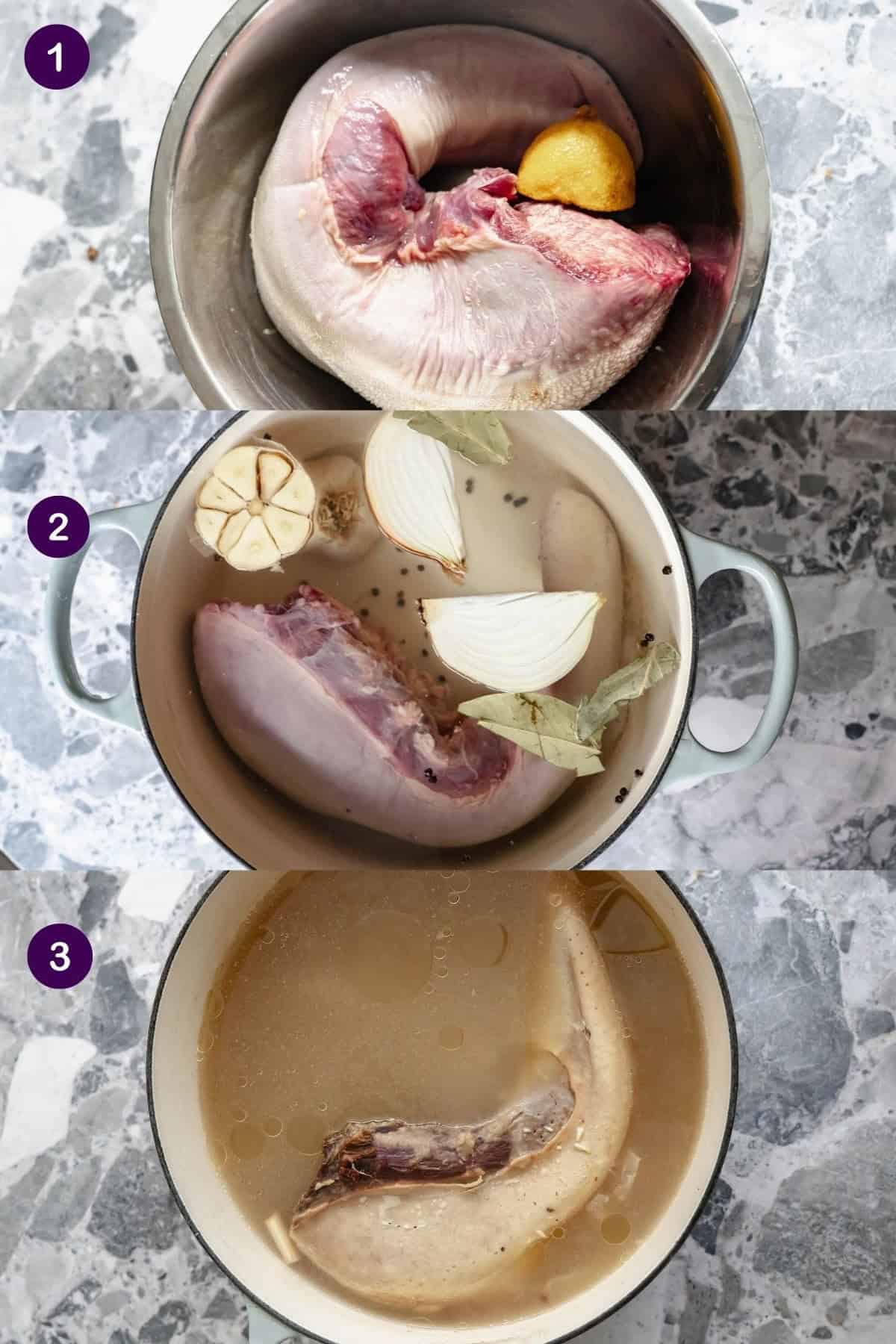
- Clean and simmer the tongue: Rinse the tongue under cold water and scrub it all over with half a lemon. Place it in a large pot and cover with water by about 2 inches. Add the onion, halved garlic head, black peppercorns, bay leaves, and salt. Bring to a boil, then lower to a gentle simmer. Cover and simmer for 3 to 4 hours, until very tender. To check, pierce the thickest part (the back of the tongue) with a fork. It should slide in with almost no resistance, and the skin will start to pull away at the edges.
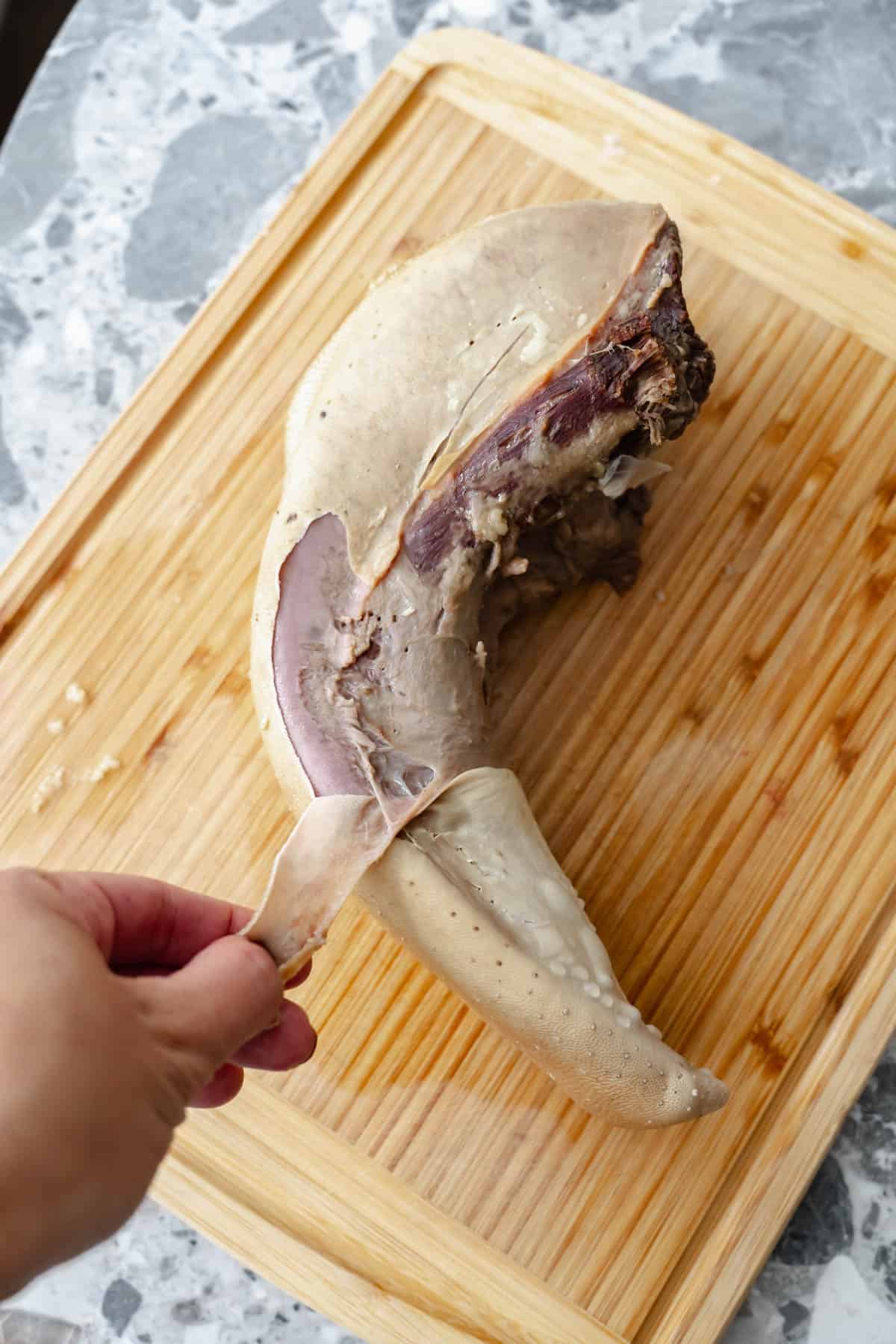
- Peel while it's still warm: Remove the tongue and let it cool for about 20 minutes, just until you can handle it. Don't let it cool completely, because the skin gets much harder to remove as it cools. Peel the skin off with your fingers. It should come away in large pieces. Trim off any gristle or fatty bits at the base.
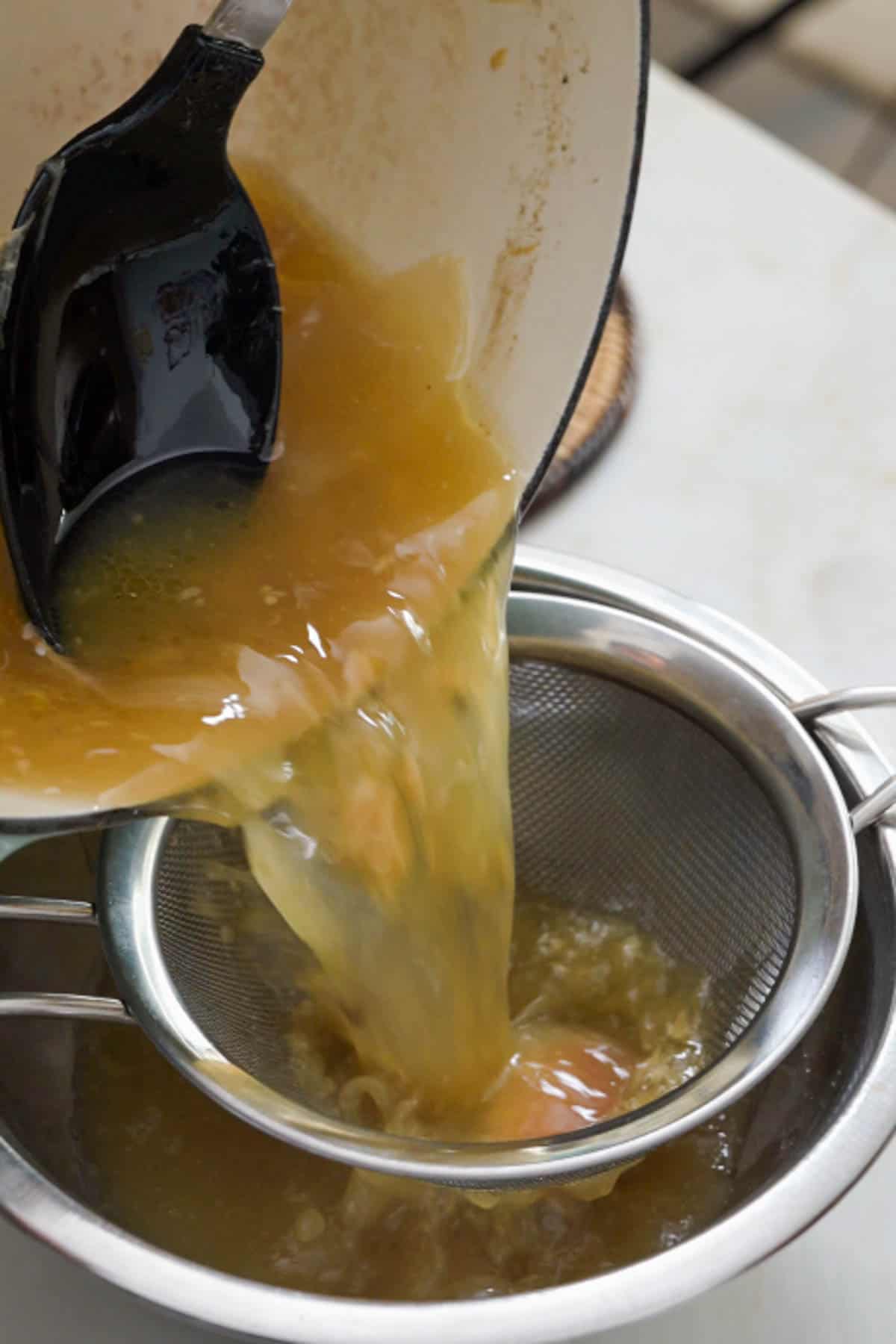
- Strain and save the broth: Strain the cooking liquid, discard the aromatics, and set aside at least 2 cups of broth for the sauce.
(Make ahead: You can do steps 1 to 3 the day before. Refrigerate the peeled tongue and the broth separately.)
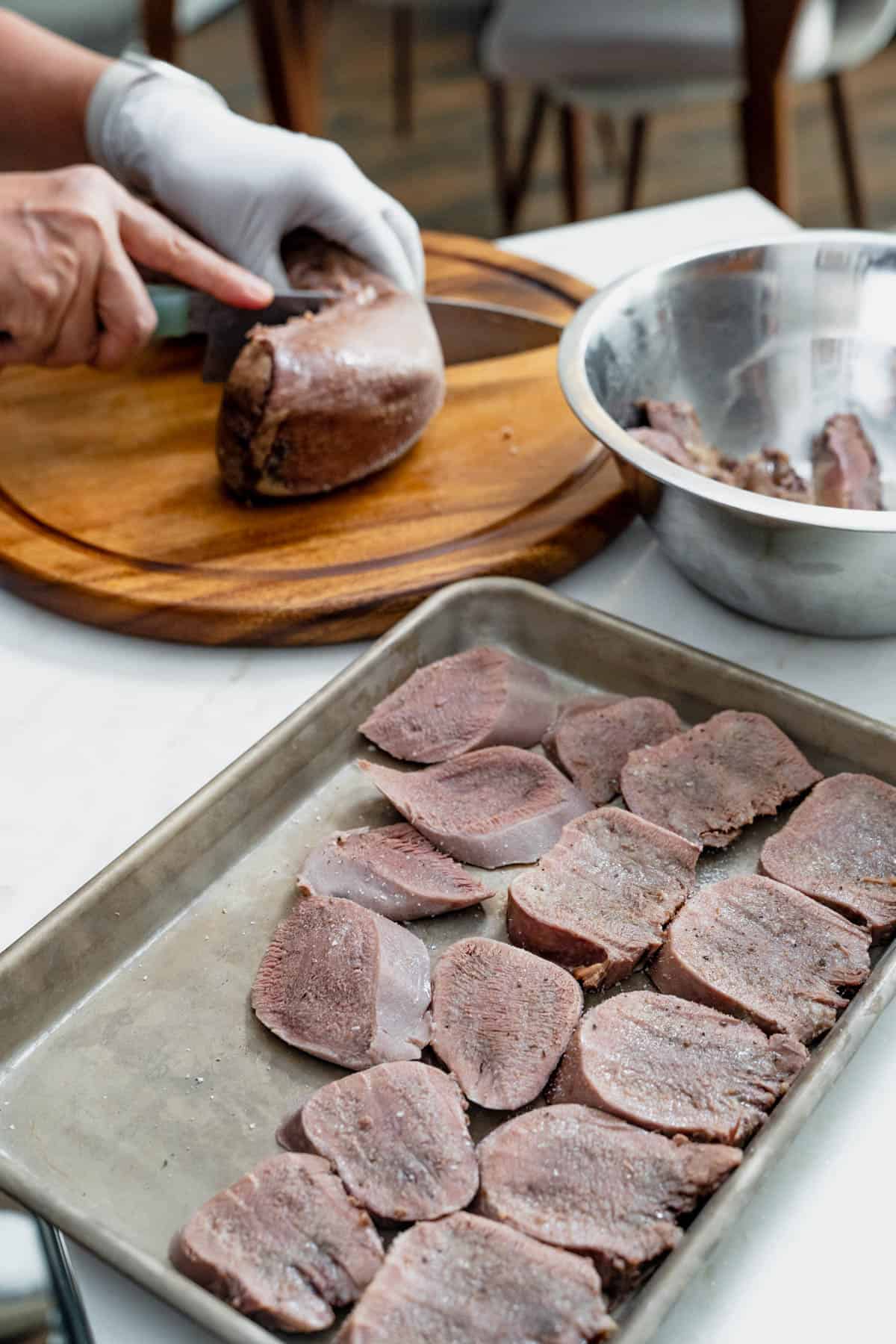
- Slice and season: Slice the tongue into ½-inch slices, cutting slightly on the diagonal for wider pieces. Season each slice on both sides with salt and pepper.
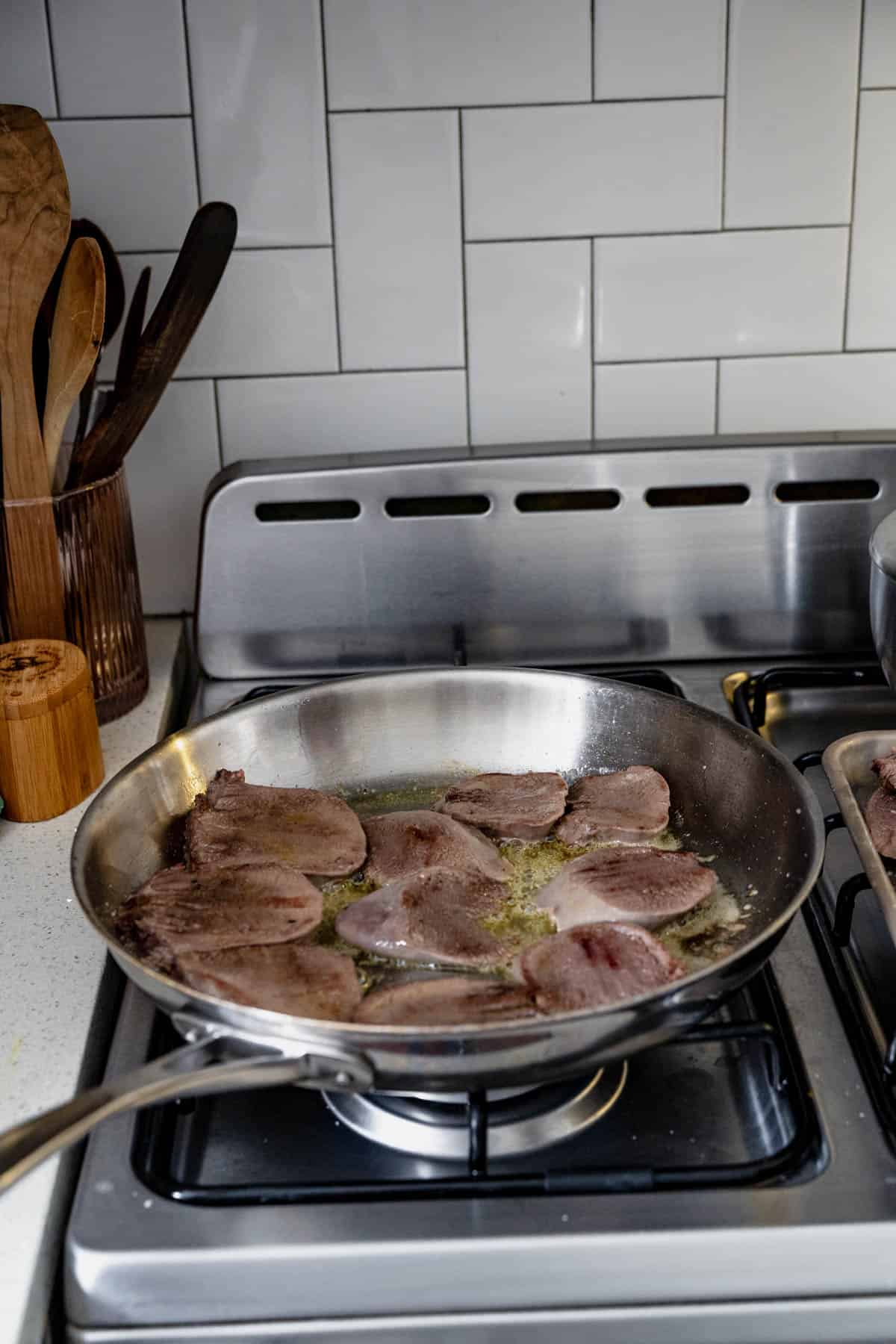
- Pan-fry in butter: In a large pan, heat 2 tablespoons of butter and 1 tablespoon of olive oil over medium-high heat. In 2 batches, cook the slices for 30 seconds to 1 minute per side. We're not looking for browning here. We're just coating the meat in butter flavor while keeping that soft, tender texture. Transfer to a platter.
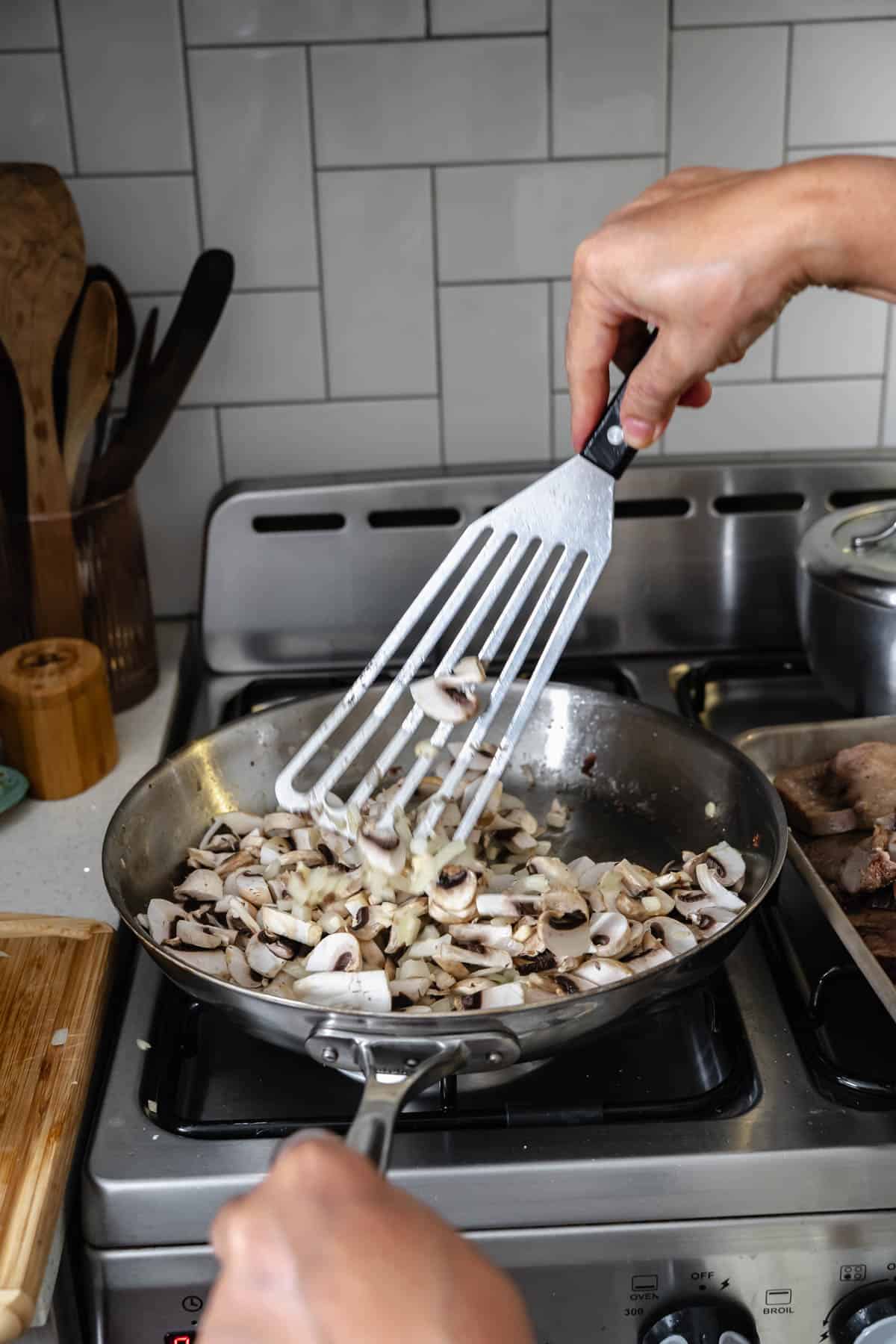
- Start the sauce: In the same pan, add the chopped onion and garlic and cook for about 3 minutes, stirring occasionally, until the onion is translucent and fragrant. Add the remaining 2 tablespoons of butter and the mushrooms. Cook for about 5 minutes, until the mushrooms release their liquid. Pour in the wine and let it cook until almost evaporated, about 2 minutes.

- Thicken the sauce: Sprinkle in the flour and stir for about 1 minute to cook out the raw flour taste. Slowly pour in 2 cups of the reserved broth, stirring as you go to prevent lumps. Add the soy sauce, Worcestershire, black pepper, and heavy cream. Simmer on low for 8 to 10 minutes, until the sauce is thick enough to coat the back of a spoon. Taste and add salt if needed. (The broth and soy sauce are already salty, so taste before you season.)

- Plate and serve: Arrange the lengua on a serving platter and spoon the mushroom sauce over the top. Finish with parsley, chives, and pink peppercorns. Serve with steamed white rice and enjoy!
Isabelle's Tips
- Peel while warm: Warm skin is easier to peel off, while cold skin clings to the meat.
- Don't skip the broth: It helps make the sauce and i save and freeze the extra beef broth for soup.
- Plate it so it looks as good as it tastes: I'll be honest and say that lengua is not the most appetizing looking food at first so I put some effort here on presentation. Fan the slices and overlap them on a light colored platter. Spoon the sauce down the middle so some meat still shows, then scatter the herbs and pink peppercorns last. The green and pink pop against the creamy sauce.
Storing and Reheating Leftover Lengua
Store leftovers in an airtight container in the fridge for up to 4 days. The flavors get even better overnight. Reheat gently on the stovetop or in the microwave. You can freeze for up to 3 months.
Your Beef Lengua Questions, Answered
It tastes like rich, tender beef, similar to pot roast or short rib, with a softer, silkier texture.
Check Mexican grocery stores (look for "lengua"), Asian markets, and local butchers. It's often sold frozen.
A fork should slide into the thickest part with almost no resistance. In my testing, this takes 3 to 4 hours of gentle simmering.
Pressure cooking is a popular shortcut, and a common starting point is about 50 to 60 minutes on high pressure with a natural release. Check for tenderness before peeling and cook longer if needed.
Yes, and it's how we make it for dinner parties Simmer, peel, and refrigerate the tongue and broth the day before. The next day, slice, pan-fry, and make the sauce in about 30 minutes.

Did you try this recipe?
Would love to hear what you think by leaving a comment below and sharing it on Instagram, Facebook, or Pinterest!
Thanks so much!
Isabelle

Beef Lengua
Equipment
- Large pot with a lid
- Large skillet or sauté pan
- serving platter
Ingredients
For the Beef Lengua
- 1 beef tongue ox tongue, about 2 to 3 lbs
- ½ lemon
- ½ onion quartered
- 1 head garlic halved crosswise
- 1 teaspoon black peppercorns
- 3 bay leaves
- 1 tablespoon salt
- Salt and black pepper for seasoning the slices
For the Mushroom Sauce
- 4 tablespoons butter divided
- 1 tablespoon olive oil
- ½ onion chopped
- 2 cloves garlic minced
- 8 oz cremini or white button mushrooms sliced
- ¼ cup dry white wine Sauvignon Blanc or Pinot Grigio
- 2 tablespoons all-purpose flour
- 2 cups reserved lengua broth
- 1 tablespoon soy sauce
- 1 tablespoon Worcestershire sauce
- Black pepper to taste
- ½ cup heavy cream
- Salt to taste
For serving
- 1 tablespoon chopped parsley
- ½ tablespoon chopped chives
- ½ teaspoon pink peppercorns
- Steamed white rice
Instructions
- Clean and simmer the tongue: Rinse the tongue under cold water and scrub it all over with half a lemon. Place it in a large pot and cover with water by about 2 inches. Add the onion, halved garlic head, black peppercorns, bay leaves, and salt. Bring to a boil, then lower to a gentle simmer. Cover and simmer for 3 to 4 hours, until very tender. To check, pierce the thickest part (the back of the tongue) with a fork. It should slide in with almost no resistance, and the skin will start to pull away at the edges.
- Peel while it's still warm: Remove the tongue and let it cool for about 20 minutes, just until you can handle it. Don't let it cool completely, because the skin gets much harder to remove as it cools. Peel the skin off with your fingers. It should come away in large pieces. Trim off any gristle or fatty bits at the base.
- Strain and save the broth: Strain the cooking liquid, discard the aromatics, and set aside at least 2 cups of broth for the sauce.Make ahead: You can do steps 1 to 3 the day before. Refrigerate the peeled tongue and the broth separately.)
- Slice and season: Slice the tongue into ½-inch slices, cutting slightly on the diagonal for wider pieces. Season each slice on both sides with salt and pepper.
- Pan-fry in butter: In a large pan, heat 2 tablespoons of butter and 1 tablespoon of olive oil over medium-high heat. In 2 batches, cook the slices for 30 seconds to 1 minute per side. We're not looking for browning here. We're just coating the meat in butter flavor while keeping that soft, tender texture. Transfer to a platter.
- Start the sauce: In the same pan, add the chopped onion and garlic and cook for about 3 minutes, stirring occasionally, until the onion is translucent and fragrant. Add the remaining 2 tablespoons of butter and the mushrooms. Cook for about 5 minutes, until the mushrooms release their liquid. Pour in the wine and let it cook until almost evaporated, about 2 minutes.
- Thicken the sauce: Sprinkle in the flour and stir for about 1 minute to cook out the raw flour taste. Slowly pour in 2 cups of the reserved broth, stirring as you go to prevent lumps. Add the soy sauce, Worcestershire, black pepper, and heavy cream. Simmer on low for 8 to 10 minutes, until the sauce is thick enough to coat the back of a spoon. Taste and add salt if needed. (The broth and soy sauce are already salty, so taste before you season.)
- Plate and serve: Arrange the lengua on a serving platter and spoon the mushroom sauce over the top. Finish with parsley, chives, and pink peppercorns. Serve with steamed white rice and enjoy!
Save This Recipe! 💌
Notes
- Make ahead: Steps 1 to 4 can be done the day before. Refrigerate the peeled tongue and broth separately, then slice, pan-fry, and make the sauce the next day in about 30 minutes.
- Peel while warm: The skin slides off easily when warm but clings to the meat once it cools.
- Save the broth: It's the base of the sauce. Freeze any extra for soups.
- Where to buy beef tongue: Most butchers carry it, often frozen. Thaw it in the fridge overnight before cooking.
- Storage: Keep leftovers in an airtight container in the fridge for up to 4 days. Reheat gently on the stovetop with a splash of broth. Freeze for up to 3 months.


Mercedes says
Full disclosure: I am a part of said relatives who explicitly request this classic Filipino Beef Lengua from Isabelle's mom when I visit, lol.
If you're in search of making an easy main course that elevates the traditional Western holiday dishcape, look no further. Dreading the thought of roasting another turkey for Canadian Thanksgiving, I used Isabelle's recipe to seamlessly weave a beloved Filipino family tradition into our celebration.
The results do not disappoint. The four-part process—simmer, peel, pan-fry, sauce—is remarkably simple. The peeling is fast and satisfying, signaling that the hardest work is behind you. I subbed a Grüner Veltliner for the recommended Sauvignon Blanc, and it worked beautifully.
Don't skip the tip to stew and slice the meat the night before. I underestimated the effort involved in making the NYT Cooking roasted butternut squash mac and cheese, so having the lengua already prepped meant my final hour before guests arrived only needed a quick pan-fry and making the creamy mushroom sauce.
That first bite was pure Proustian nostalgia. I’ll be repeating this for Christmas, and plan to test pressure-cooking the meat to cut the stewing time and use the same pot for the sauce. For anyone abroad yearning for the authentic taste of family gatherings in the Philippines, this should be your definitive Filipino beef lengua recipe.