
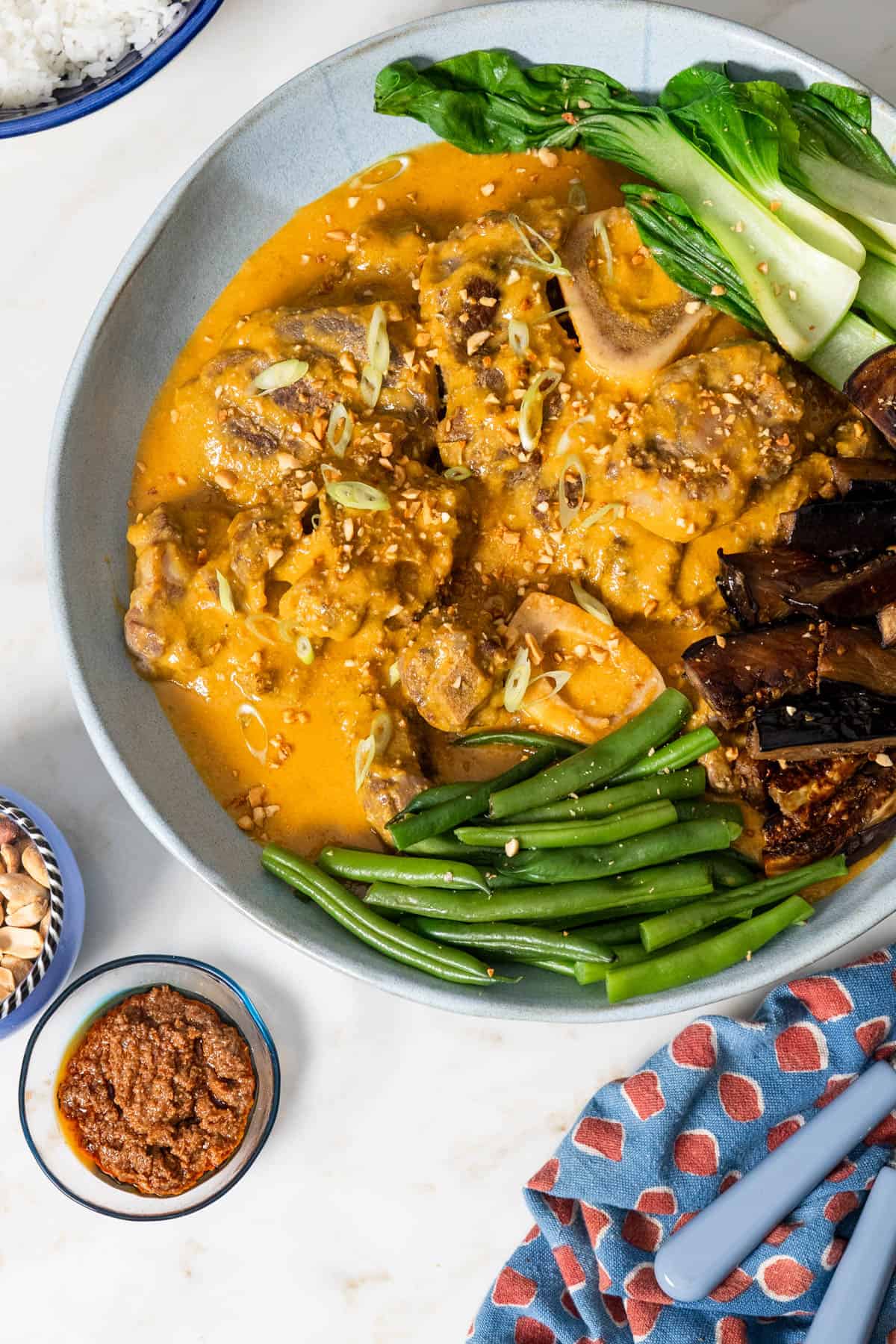
Kare kare (KAH-reh KAH-reh, also spelled kare-kare or karekare) is one of those memorable Filipino dishes and one of my favorites. It's always a big deal when it's on the table because it's truly a labor of love.
This Filipino stew has slow-cooked beef in a thick peanut sauce, tinted with annatto (or also called achuete, a seed used mostly for color) and served with bagoong (fermented shrimp paste) on the side.
This kare kare recipe isn't a one pot recipe. The meat braises for 2 hours while you make the sauce and prep the vegetables. But if you've had kare kare before, you know it's worth it.
If you love comforting Filipino dishes like this one, try my Beef Kaldereta, Ginataang Gulay or Lumpia next.
Save This Recipe! 💌
Jump to:
What Makes My Kare Kare Recipe Different
- I use beef shank and oxtail: It's traditionally made with oxtail, which gives the sauce its rich, sticky body. But I also use bone-in shanks for more meat on each piece, plus marrow that melts into the broth.
- I toast and grind glutinous rice: Toasting it until light brown and grinding it thickens the sauce.
- I roast my eggplant: To save on time, I roast my eggplant in the oven while I prep the green beans and bok choy.
- I make annatto oil: I extract the color of the annatto seeds with warm oil and use that oil to saute the onions and garlic.
- I add bagoong into the sauce: Typically, bagoong is only served on the side, but I wanted this version to have a pre-seasoned sauce. There will always be extra bagoong on the side, of course.
Kare Kare Ingredients
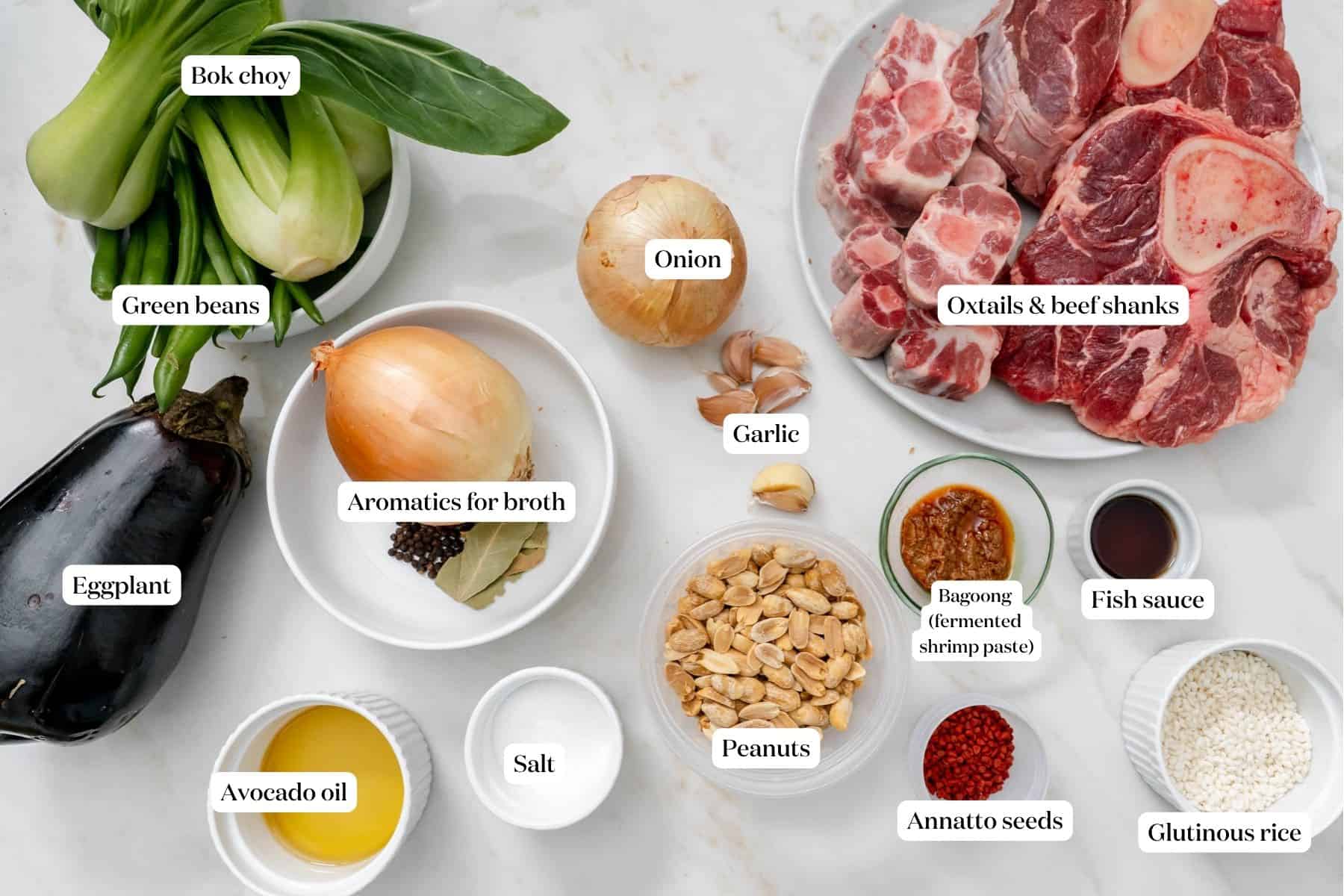
- Beef shank and oxtail: Look for cross-cut, bone-in shank about 1½-2 inches thick and oxtail in even-sized pieces. Both are full of connective tissue. All shank or all oxtail works too. If you love shank, try my Braised Beef Shanks with Tarragon Gremolata.
- Glutinous rice: Also called sweet rice or malagkit, found at Asian markets. Toasted and ground, it thickens the sauce. Regular white rice works as well.
- Peanuts: Roasted, unsalted peanuts ground into a paste give the most peanut flavor. One cup makes about half a cup of paste. Unsweetened natural peanut butter is the shortcut.
- Avocado oil: I use it for the annatto oil and to help the peanuts blend. Any neutral oil works.
- Annatto seeds (achuete): Find them at Asian or Latin markets. Warmed briefly in oil, they turn the sauce orange. Annatto powder works too: stir about a teaspoon into the hot oil for a few seconds.
- Bagoong: Salty, savory shrimp paste. Look for jars labeled "sauteed" or "guisado" at Asian markets. A little goes into the sauce and more goes on the table.
- Fish sauce: For seasoning the sauce at the end.
- Eggplant, green beans and bok choy: Half a globe eggplant is enough; one or two Chinese or Japanese eggplants work too and roast up creamy. Regular green beans are easier to find than long beans (sitaw), and baby bok choy holds its shape on a platter. All three are classic vegetables for kare kare.
*See recipe card below for full list of ingredients and quantities.
How to Make This Kare Kare Recipe
Make the Beef and Broth
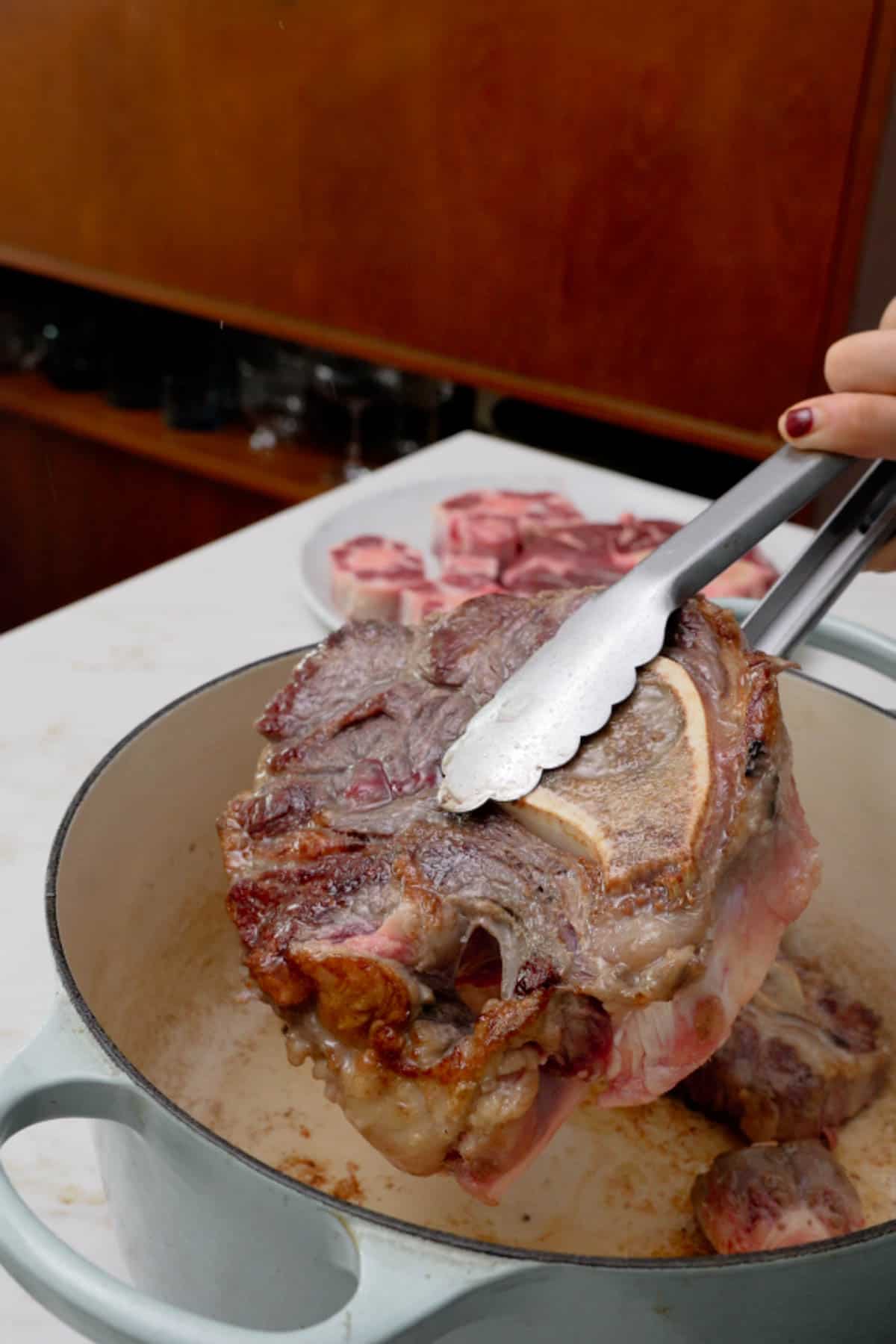
- Sear the beef: Pat the shanks and oxtail dry and season with salt. Heat oil in a large Dutch oven over medium-high heat and sear the beef in batches, 3-4 minutes per side, until golden brown. Don't move the pieces around; that crust is flavor.
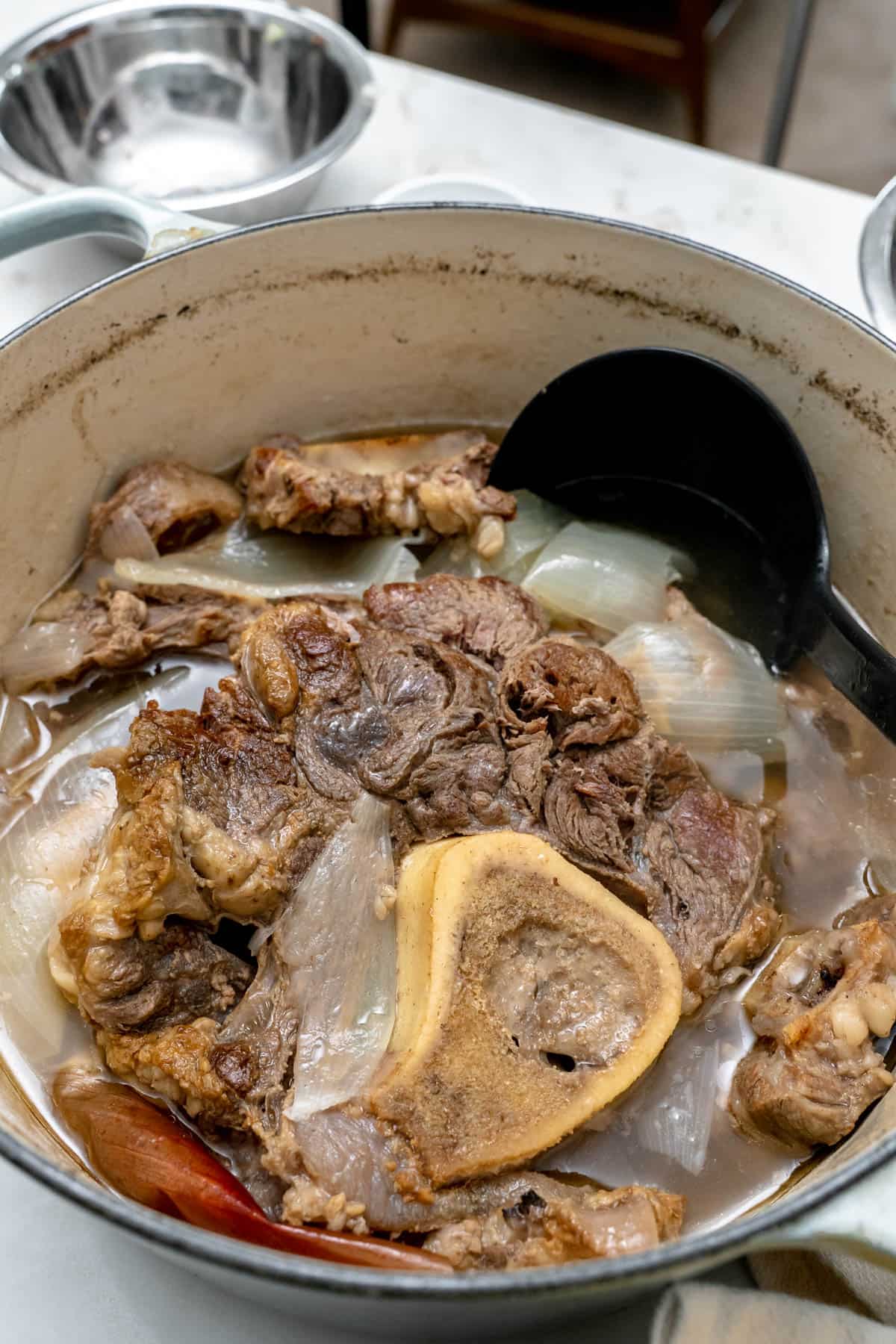
- Braise the meat: Place the meat back in the pot and pour enough water to cover the beef by about 1 inch (10-12 cups), and scrape up the browned bits from the bottom as it heats. Add 1 onion, the peppercorns and the bay leaf. It takes 15-20 minutes to come to a boil. Skim the foam with a skimmer, lower the heat and simmer partly covered for about 2 hours, until the meat pulls easily from the bone. Reserve 4 cups of broth for the sauce. While the beef simmers, make the rice powder and peanut paste (steps 3 and 4) and cut the vegetables. If you have time, do this a day ahead: chill the broth overnight and lift off the solid fat.
How to Make Kare Kare Sauce From Scratch
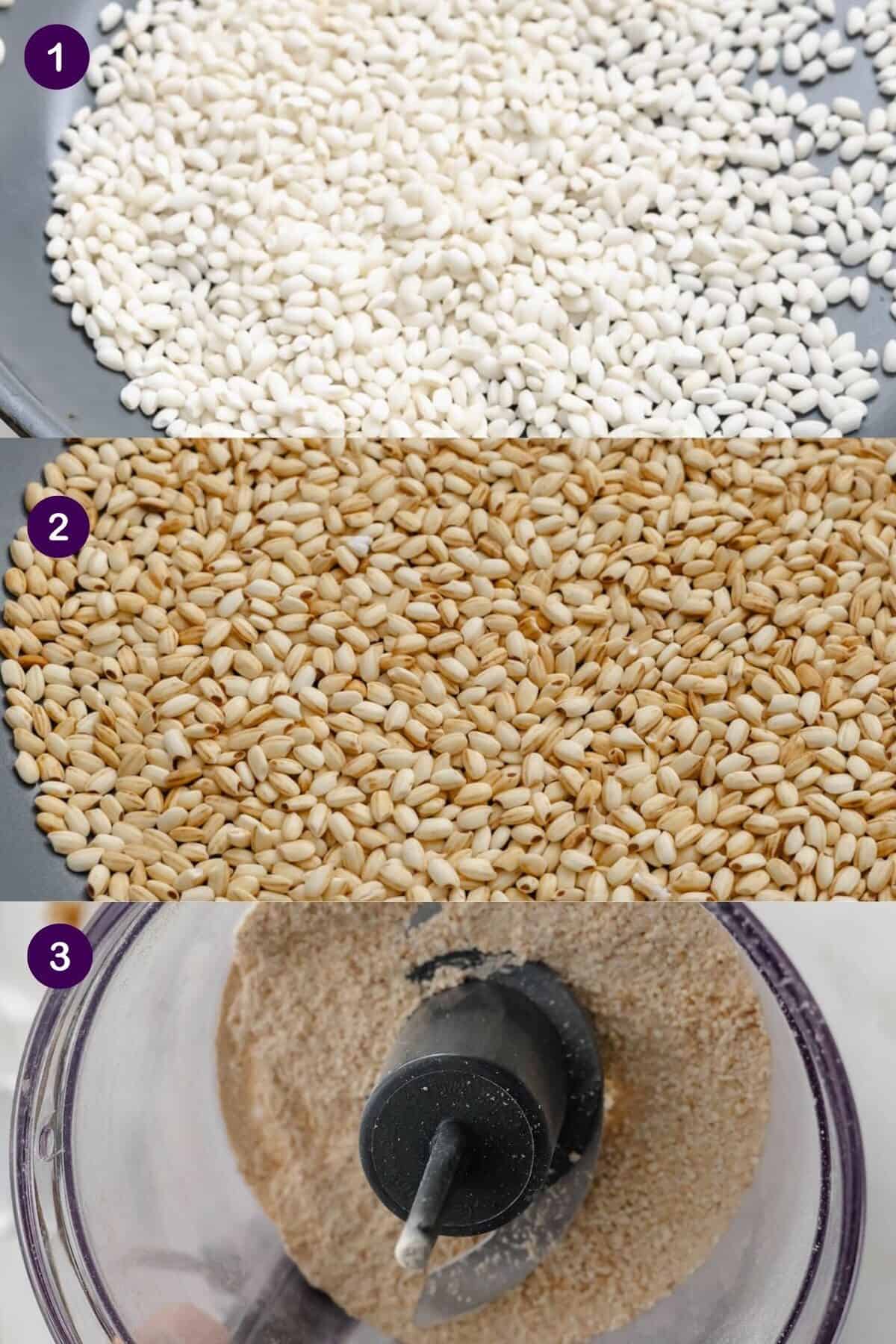
- Make the rice powder: Toast the glutinous rice in a dry skillet over medium heat for about 10 minutes, stirring often, until light brown, not dark. It takes a while to start browning, then browns quickly, so keep an eye on it. The pan and rice are very hot, so let the rice cool, then grind it to a fine powder in a food processor or mortar and pestle.
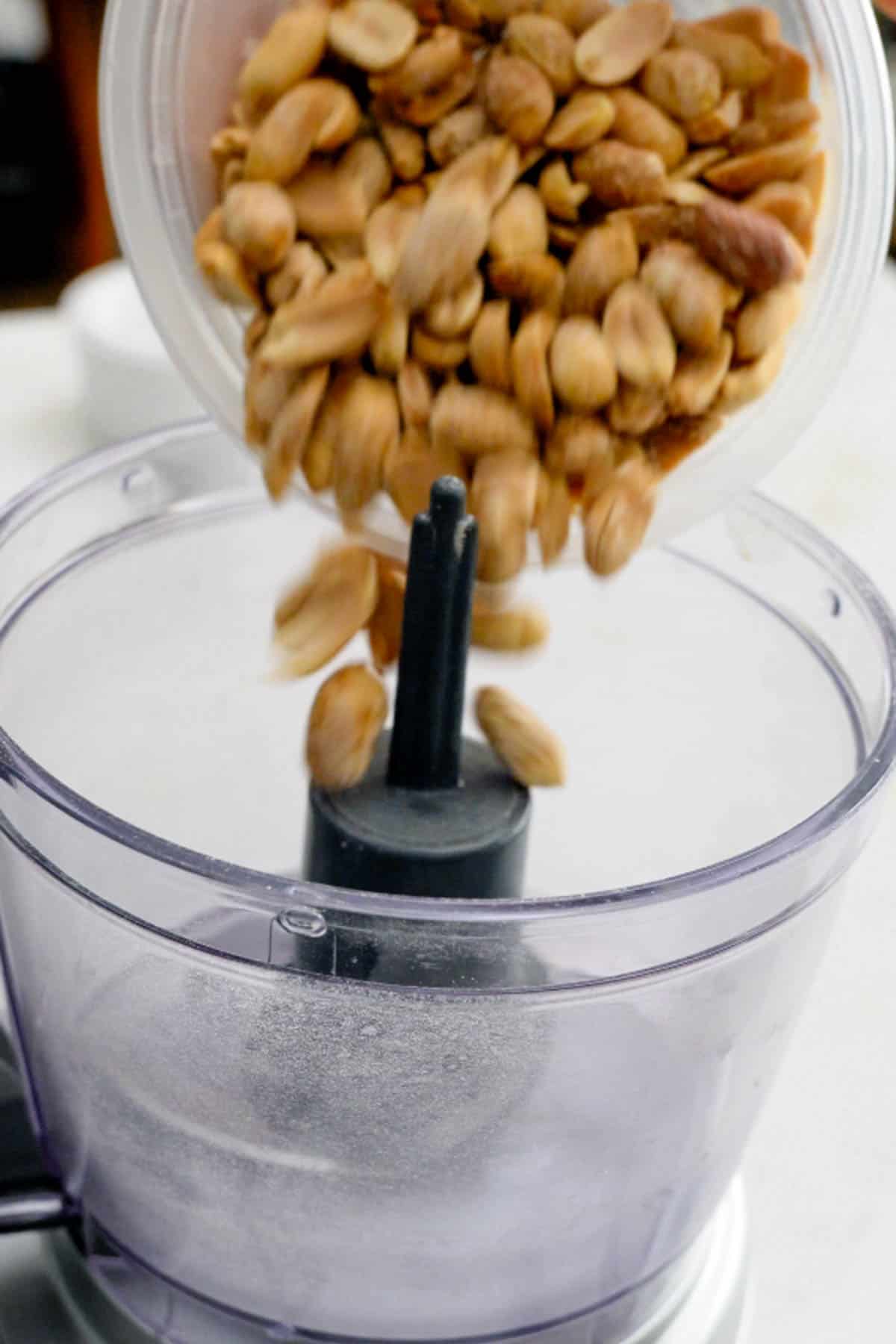
- Make the peanut paste: Pulse the peanuts in the food processor. Before they become a paste, set aside about half a tablespoon of crushed peanuts for garnish. Add 2-3 teaspoons of avocado oil and a pinch of salt and keep blending. The oil helps a less powerful blender grind them smoother. (Using peanut butter? Skip this step.)
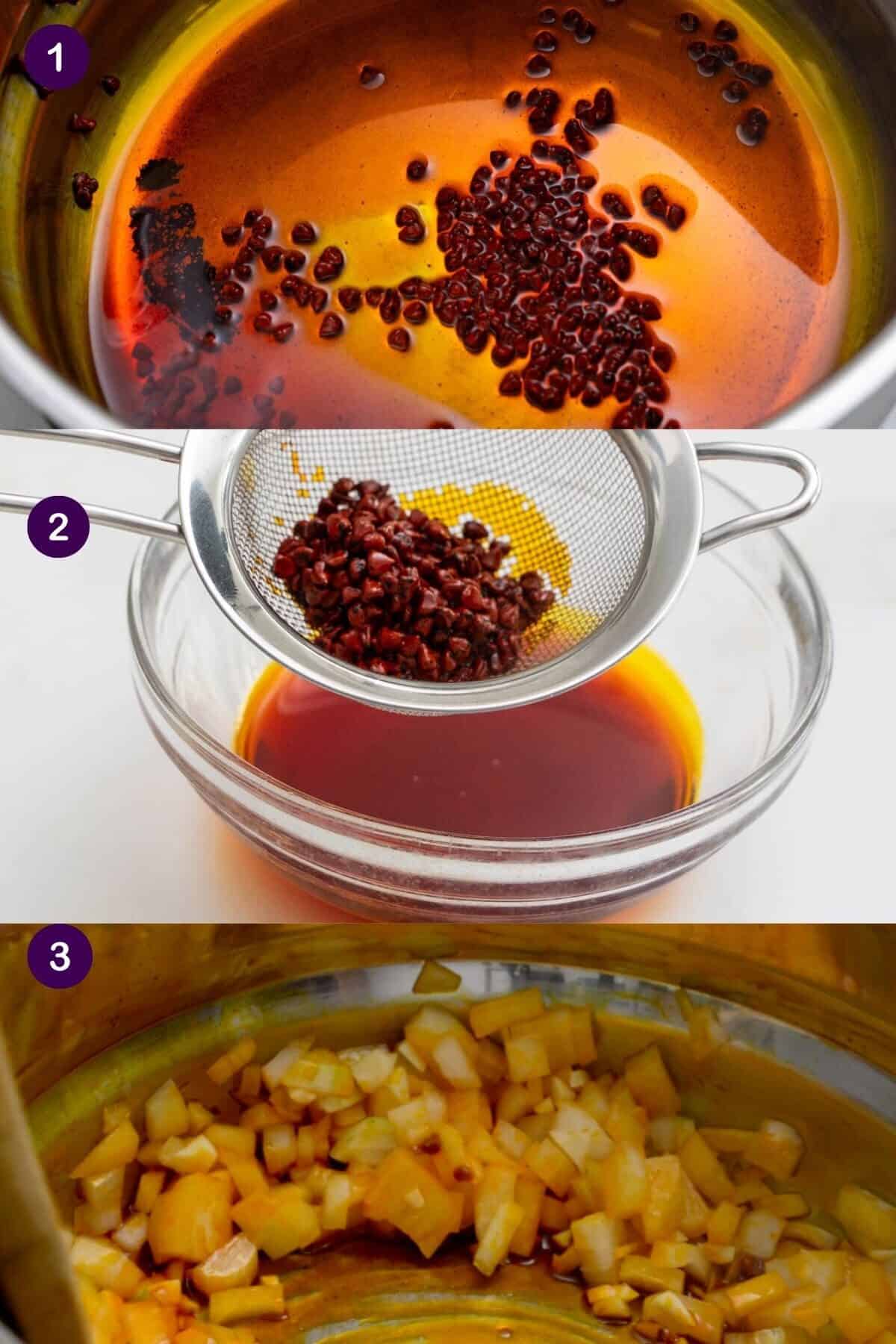
- Make the annatto oil and saute the aromatics: In the pot you'll use for the sauce, warm 2 tablespoons of avocado oil over low heat. Add the annatto seeds and swirl for about a minute, until the oil turns deep orange, then carefully pour the oil through a fine-mesh strainer into a heatproof bowl. Discard the seeds and pour the oil back into the pot. Keep the heat low, since the seeds turn bitter if they burn. Turn the heat to medium, add the chopped onion, garlic and bagoong and cook until the onion is translucent, about 4 minutes. Half a tablespoon of bagoong is enough here, since you'll serve more on the side.
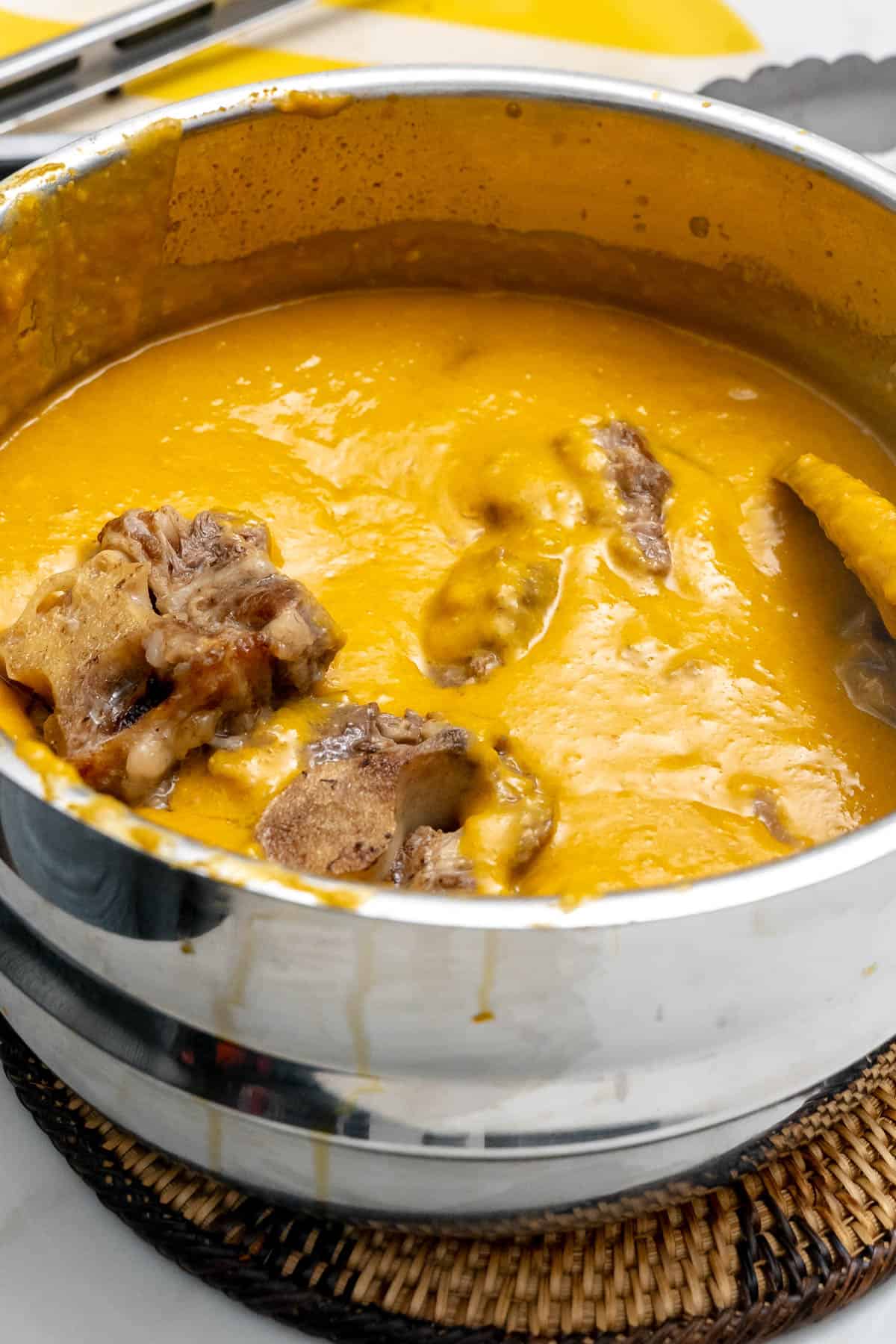
- Simmer and thicken the sauce: Pour in the 4 cups of reserved broth and simmer for 30 minutes. Preheat the oven to 425°F now for the eggplant. This lets the broth concentrate. Whisk in the toasted rice powder and peanut paste and simmer 10-15 minutes, stirring occasionally, until it coats the back of a spoon. Taste, then season with about 1 tablespoon of fish sauce. For an extra silky sauce, blend it in the pot with an immersion blender (optional but recommended!). If it's too thick after blending, loosen it with a splash of broth. Add the beef to the sauce and cook for 2 minutes, turning gently, until the meat is coated.
Roast and Boil the Vegetables
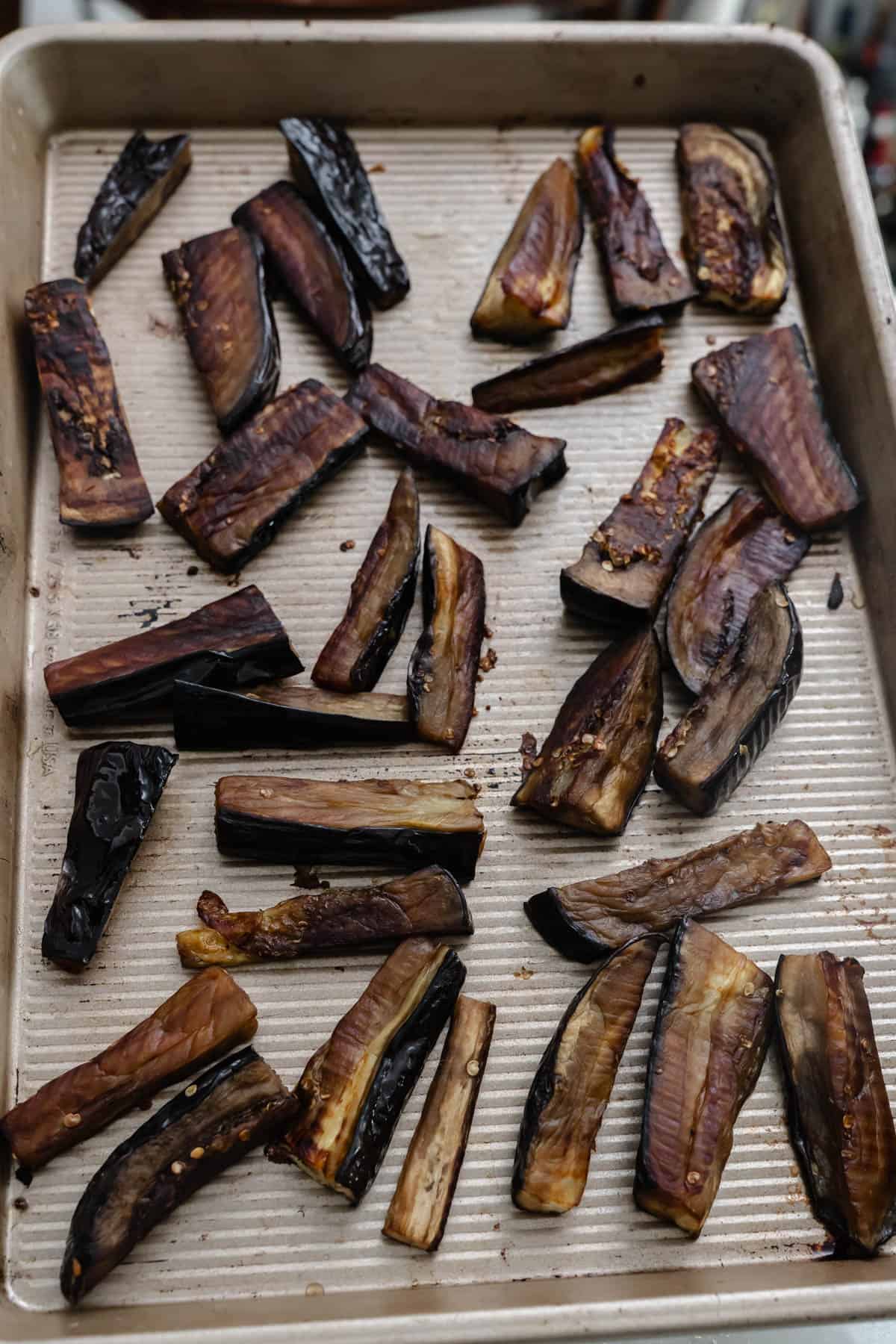
- Cook the vegetables: Start this while the broth simmers in step 6. Toss eggplant pieces with olive oil and salt and roast for 30 minutes, flipping halfway, until you get a nice char. While it roasts, bring a pot of salted water to a boil. Boil the green beans for 3-4 minutes, until bright green and crisp-tender, then the bok choy for 2 minutes, until the leaves wilt. Drain well.
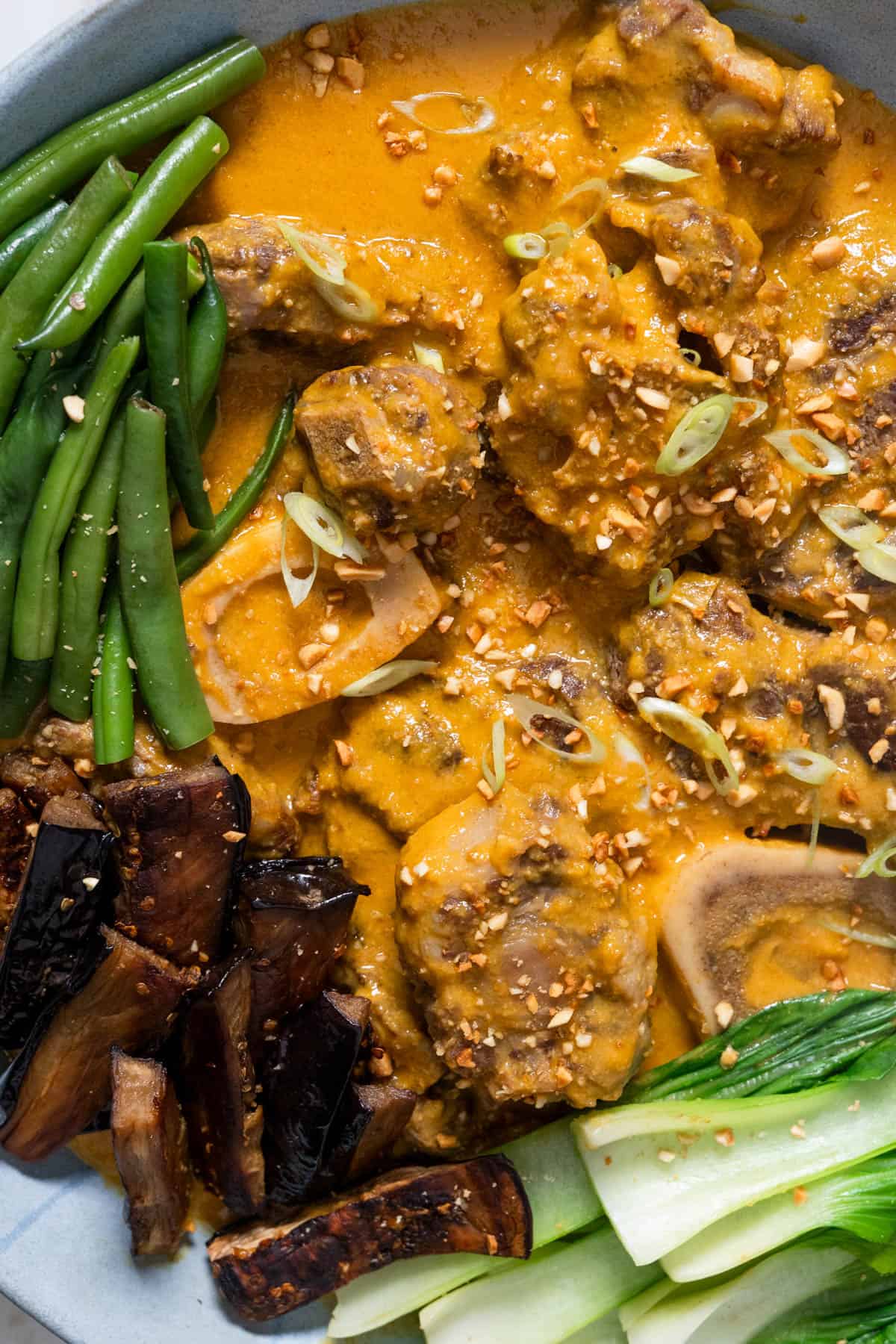
- Serve: Arrange the beef on a platter and spoon the sauce over and around it. Add the vegetables, then scatter some crushed peanuts and scallions (optional). Serve with steamed rice and bagoong.
Kare Kare Variations
- All oxtail: The classic way.
- Pressure cooker: You can use a pressure cooker for 40-45 minutes on high. Build the sauce on the stovetop as written.
- Banana heart: Banana heart (puso ng saging) is also traditional but hard to find here in New York. If you have some, peel off the tough outer layers, slice it and soak it in salted water so it doesn't darken. Then blanch it for about 1 minute.
- Almond butter: For a peanut-free version, use about ½ cup of smooth, unsweetened almond butter. Expect a milder and sweeter sauce.
What to Serve with Kare Kare (Bagoong, Rice and Sides)
Kare kare with bagoong is the classic way to eat it. Serve it with steamed rice or my Filipino Garlic Fried Rice, and something bright to cut the richness, like Ensaladang Talong (Filipino eggplant salad) or atchara (pickled green papaya).
Isabelle's Tips for Kare Kare
- Use the waiting time: While the beef simmers for 2 hours, make the rice powder and peanut paste, and cut the vegetables. Heat the oven before you start the sauce. While the broth simmers for 30 minutes, roast the eggplant, then boil the green beans and bok choy while the sauce thickens.
- Watch the rice toast: It browns slowly, then fast. Light brown is the goal.
- Thin as you go: Peanut sauce thickens as it sits. Keep a little broth on hand.
- Cook the vegetables last: They stay bright for the platter.
How to Store and Make Ahead to Save Time
Cook the beef and broth a day ahead if you can. Chilling the broth overnight lets the fat rise and harden, so you can lift it off easily, and the sauce comes out less greasy. Store the beef and sauce in an airtight container in the fridge for up to 4 days, with the vegetables separate. Reheat gently with a splash of broth. The beef and sauce (without vegetables) freeze for up to 3 months.

Did you try this recipe?
Would love to hear what you think by leaving a comment below and sharing it on Instagram, Facebook, or Pinterest!
Thanks so much!
Isabelle
Beef Kare Kare
Equipment
- Large Dutch oven
- Skimmer
- Skillet
- Medium pot for the sauce
- Fine-mesh strainer and small heatproof bowl
- sheet pan
- Pot for boiling the vegetables
- Immersion blender (optional)
Ingredients
Beef and broth
- 2 pounds bone-in beef shank
- 1 pound oxtail
- Kosher salt to season the beef
- 1 tablespoon neutral oil for searing
- 1 onion
- ½ teaspoon black peppercorns
- 1 bay leaf
- 10-12 cups water enough to cover the beef by 1 inch
Kare kare sauce
- ¼ cup glutinous rice
- 1 cup roasted unsalted peanuts or ½ cup natural peanut butter
- 2-3 teaspoons avocado oil for the peanut paste
- 2 tablespoons avocado oil for the annatto oil
- 1 tablespoon annatto seeds
- 1 onion chopped
- 4 garlic cloves minced
- ½ tablespoon bagoong fermented shrimp paste, plus more to serve
- 4 cups reserved beef broth
- 1 tablespoon fish sauce or to taste
Vegetables
- ½ globe eggplant or 1-2 Chinese eggplants, cut into 1 inch cubes or batons 1 inch thick and 3 inches long
- Olive oil and salt for roasting
- 8 ounces green beans trimmed
- 3-4 heads baby bok choy halved
- ½ tablespoon crushed peanuts
- 2 scallions sliced, for garnish (optional)
For serving
- Steamed rice to serve
- Bagoong
Instructions
Braising beef and broth
- Pat the beef dry and season with salt. Heat the oil in a large Dutch oven over medium-high heat and sear the shanks and oxtail in batches, 3-4 minutes per side, until golden brown.
- Return the beef to the pot and add enough water to cover it by 1 inch (about 10-12 cups), scraping up the browned bits. Add 1 onion, the peppercorns and the bay leaf. Bring to a boil (15-20 minutes), skim the foam with a skimmer, then simmer partly covered for about 2 hours, until tender. Reserve 4 cups broth. While the beef simmers, make the rice powder and peanut paste and cut the vegetables.
Kare kare sauce
- Toast the glutinous rice in a dry skillet over medium heat for about 10 minutes, until light brown, watching closely since it browns quickly once it starts. Let cool, then grind to a fine powder in a food processor or mortar and pestle. Set aside.
- Pulse 1 cup of peanuts in the food processor, setting aside ½ tablespoon crushed peanuts for garnish, then add 2-3 teaspoons avocado oil and a pinch of salt and blend to a paste. Skip if using peanut butter.
- In the sauce pot, warm 2 tablespoons avocado oil over low heat. Add the annatto seeds and swirl about 1 minute, until the oil is deep orange, then pour it through a fine-mesh strainer into a heatproof bowl, discard the seeds and return the oil to the pot. Turn the heat to medium, add the chopped onion, garlic and bagoong and cook until the onion is translucent, about 4 minutes.
- Add the 4 cups reserved broth and simmer 30 minutes. Meanwhile, heat the oven to 425 degrees Fahrenheit. Whisk in the rice powder and peanut paste and simmer 10-15 minutes, stirring occasionally, until it coats the back of a spoon. Season with 1 tablespoon fish sauce, or to taste. Optional but recommended: blend with an immersion blender, and loosen with a splash of broth if too thick. Add the beef to the sauce and cook 2 minutes, until coated.
Vegetables and serving
- While the broth simmers, toss the eggplant with olive oil and salt and roast 30 minutes, flipping halfway, until nicely charred. Meanwhile, boil the green beans 3-4 minutes and the bok choy 2 minutes in salted water. Drain well.
- Arrange the beef on a platter, spoon the sauce over, add the vegetables and top with the reserved crushed peanuts and sliced scallions (optional). Serve with rice and bagoong.
Save This Recipe! 💌
Notes
- Make ahead: if you have time, cook the beef and broth a day ahead and chill overnight so the fat hardens and lifts off easily. Store the beef and sauce up to 4 days in the fridge, with the vegetables separate. Freeze the beef and sauce (without vegetables) up to 3 months. Reheat gently with a splash of broth.
- Timing: while the beef simmers, make the rice powder and peanut paste and cut the vegetables. Heat the oven before you start the sauce. Roast the eggplant while the broth simmers for 30 minutes, then boil the green beans and bok choy while the sauce thickens.
- Peanut butter shortcut: use ½ cup unsweetened natural peanut butter instead of making the peanut paste, and skip that step.
- Cuts: all beef shank or all oxtail works too.

Leave a star rating and review, ask a question, or share a tip!