
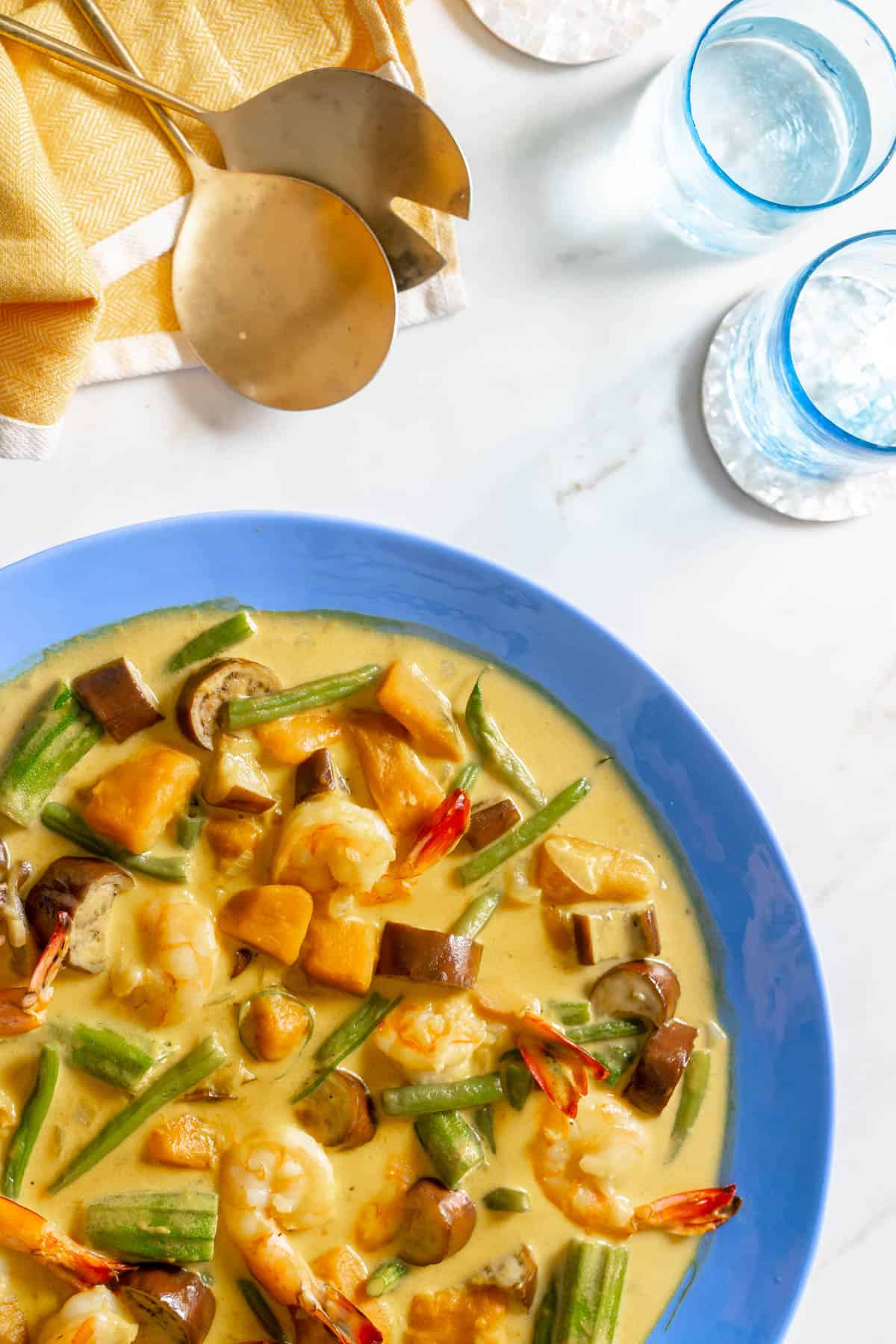
This Ginataang Gulay (Vegetables in Coconut Milk) is the dish I would make for you if you'd never tried Filipino food before. I've cooked this dish countless of times for my friends in college when I was homesick, my host family in France, for my roommates who'd never heard of it, and really anyone who hasn't had Filipino food yet. It's kind of my gateway Filipino dish along with garlic rice.
This dish is pretty easy to put together and also very customizable, you can't really can't mess it up!
If you're new to Filipino cooking, check out my Lumpia and Arroz Caldo . And if you love cooking with coconut milk, my Chicken Adobo with Coconut Milk is worth bookmarking too.
Save This Recipe! 💌
Jump to:
Ingredients
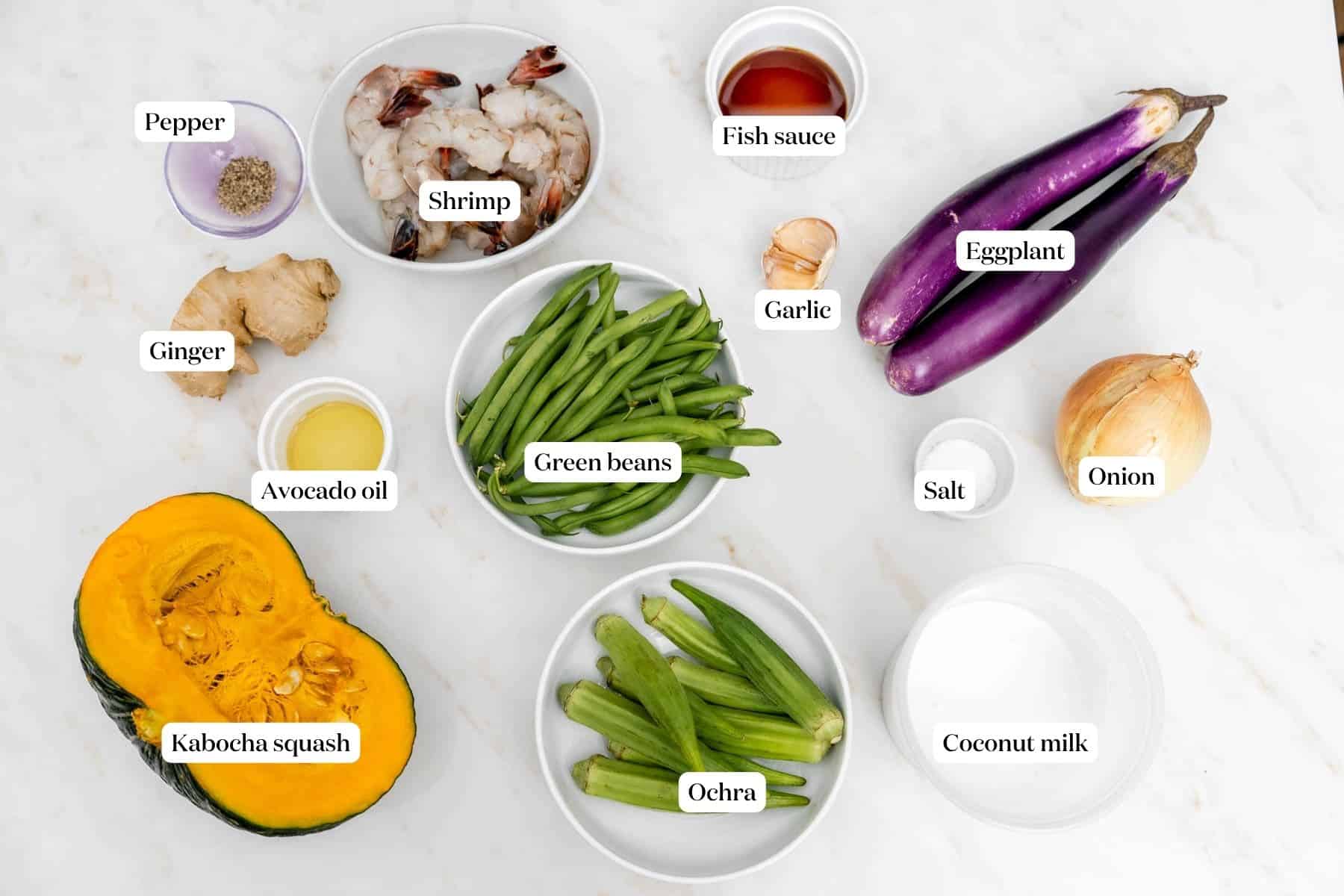
- Kabocha squash: Kabocha is the closest thing you'll find in the US to the native Filipino kalabasa. It's starchy, which naturally thickens the coconut milk sauce as it cooks. You should be able to find them at Asian grocery stores. I've also made this with butternut squash, it won't thicken the sauce quite as much but it still tastes great and is a great variation!
- String beans: I use regular string beans because they're easy to find anywhere in New York. Traditional ginataang gulay uses sitaw, which are long beans.
- Chinese eggplant: Thinner and more tender than regular eggplant, with a thinner skin that soaks up the coconut milk sauce really well. If you can only find Italian eggplant, cut it into smaller pieces so it cooks through in the same amount of time.
- Okra: I love ochra in this dish. It adds texture and also helps thicken the sauce. But I get that it's not everyone's jam so if it's not for you, feel free to omit it!
- Ginger: Most ginataang gulay recipes don't include ginger, but I always add it in mine for flavor.
- Coconut milk: Use full fat canned coconut milk. Shake the can well before opening.
- Fish sauce: This is your primary seasoning and where most of the umami comes from. Start with 1 tablespoon and taste at the end before adding more because different brands vary a lot in saltiness.
*See recipe card below for full list of ingredients and quantities.
How to Prep Kabocha Squash
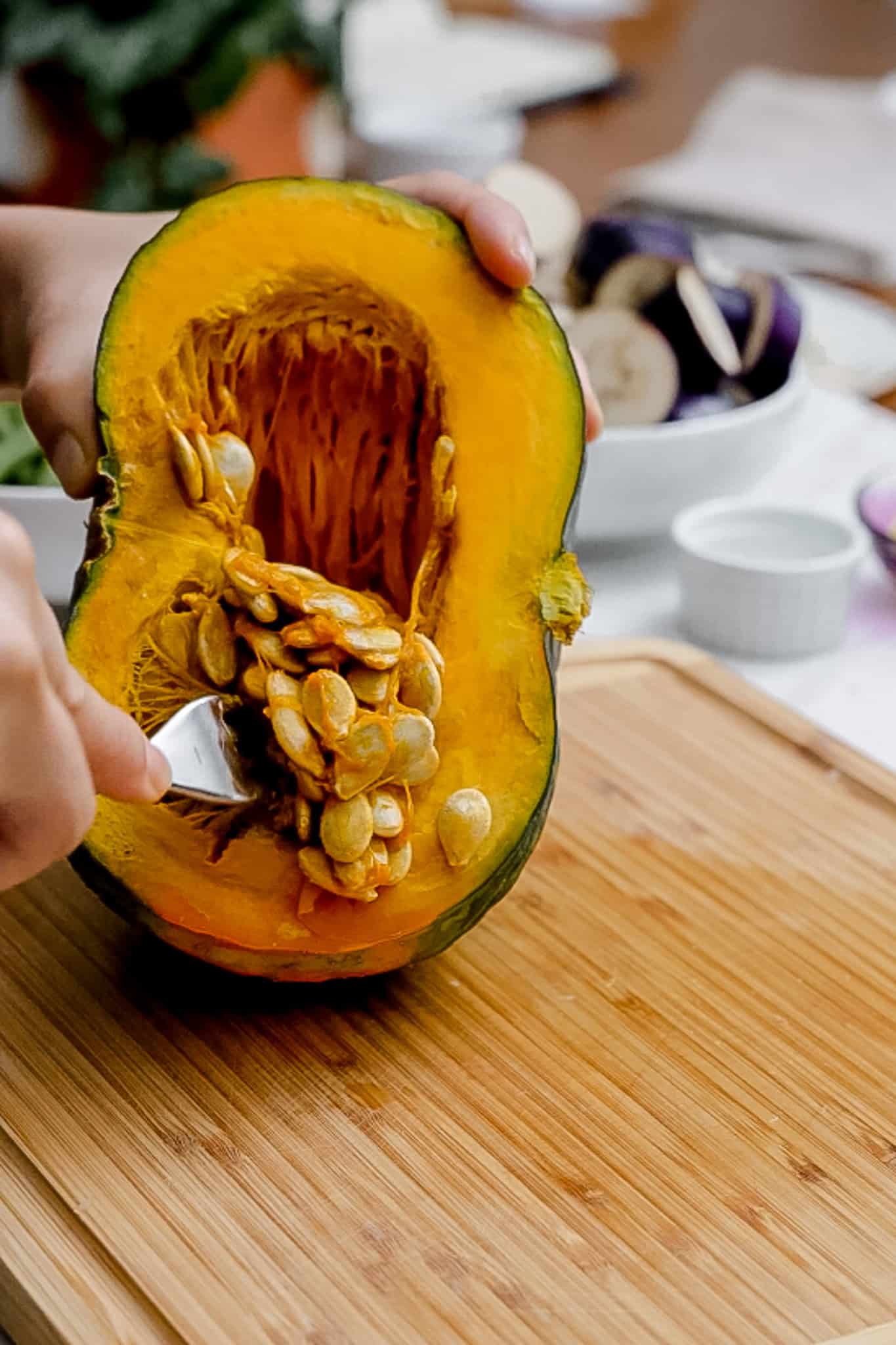
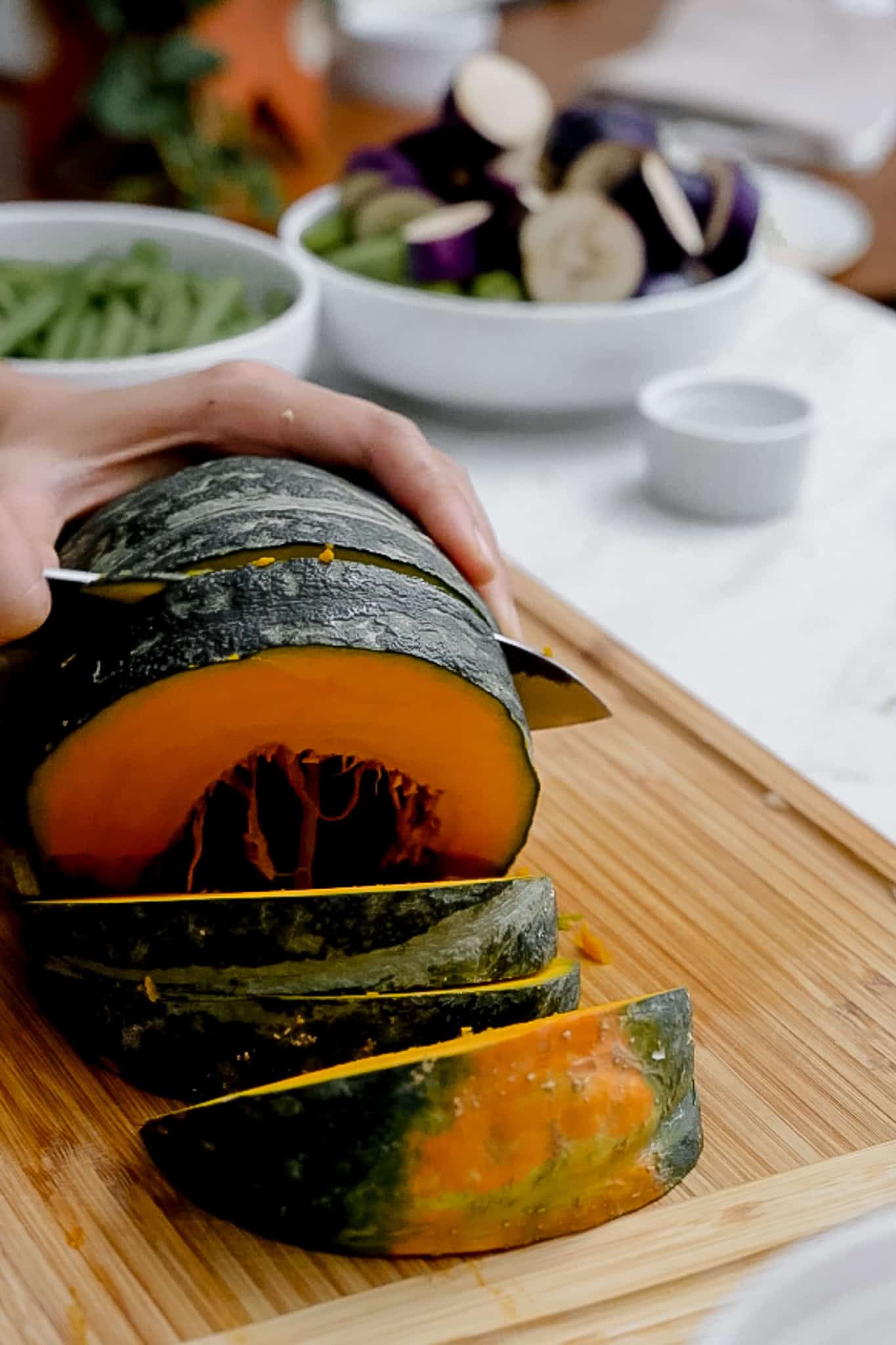
Kabocha has a tough skin and can be tricky to cut raw. Here's what I do: microwave the whole squash for 3 minutes, then let it sit for a minute before handling. The skin softens just enough that you can cut it in half. Scoop out the seeds, cut out slices like you would a melon, cut off the skin, then cube the flesh into 1 to 1½ inch pieces.
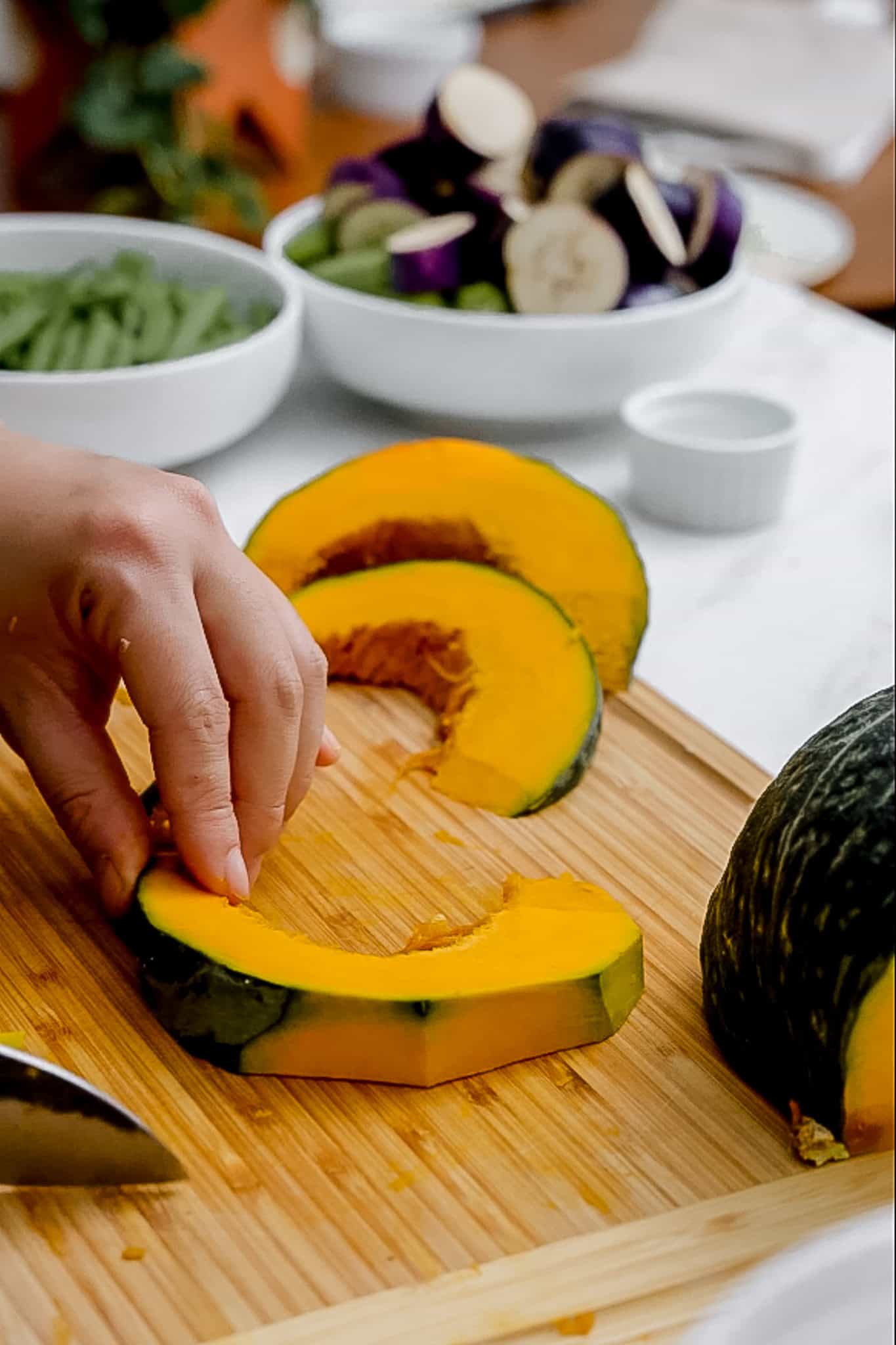
How to Make Ginataang Gulay
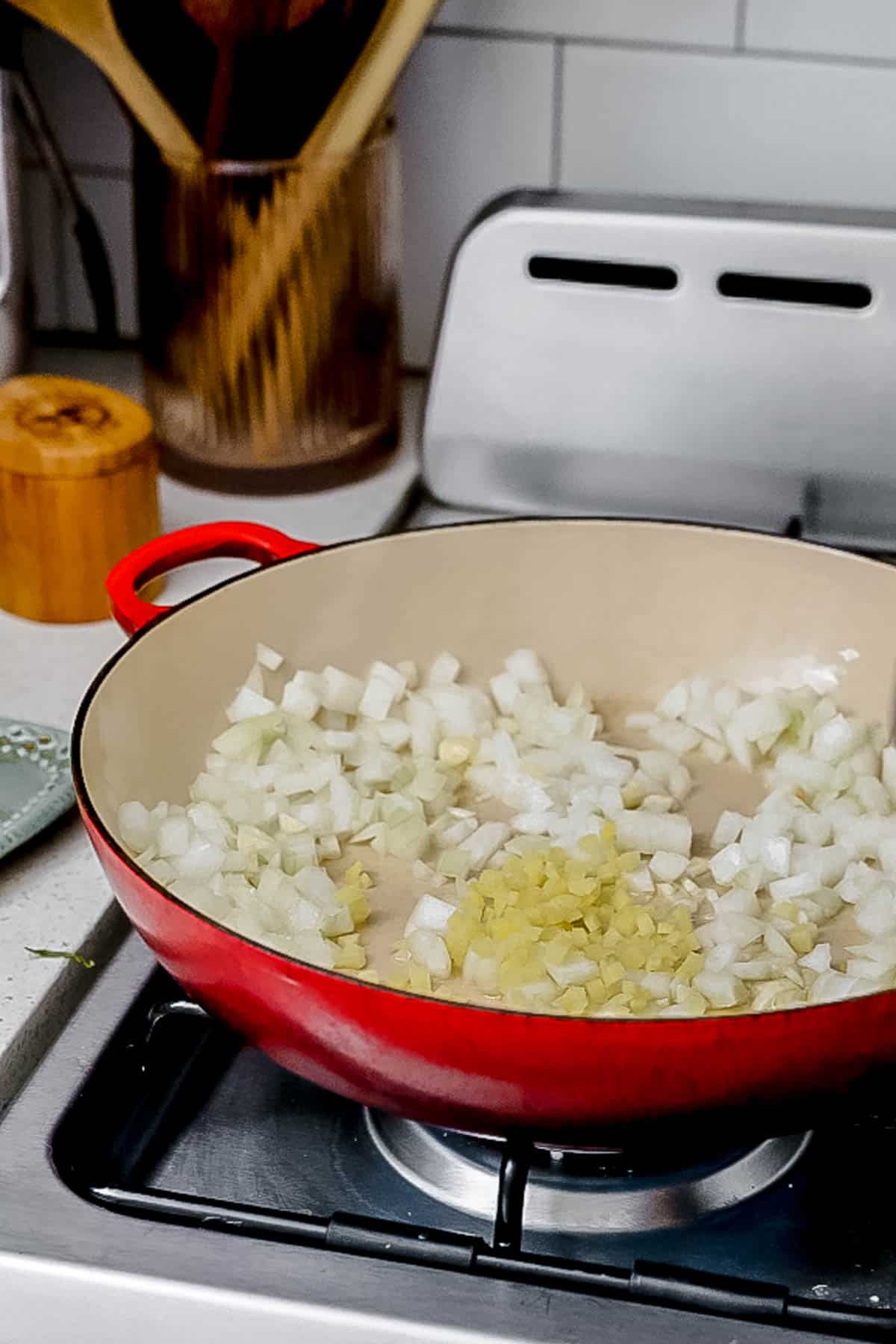
- Sauté the aromatics: Heat a large skillet over medium heat and add the avocado oil. Once hot, add the garlic, onion, and ginger. Cook for 5 to 7 minutes, stirring occasionally, until the onion is slightly translucent and everything smells fragrant.
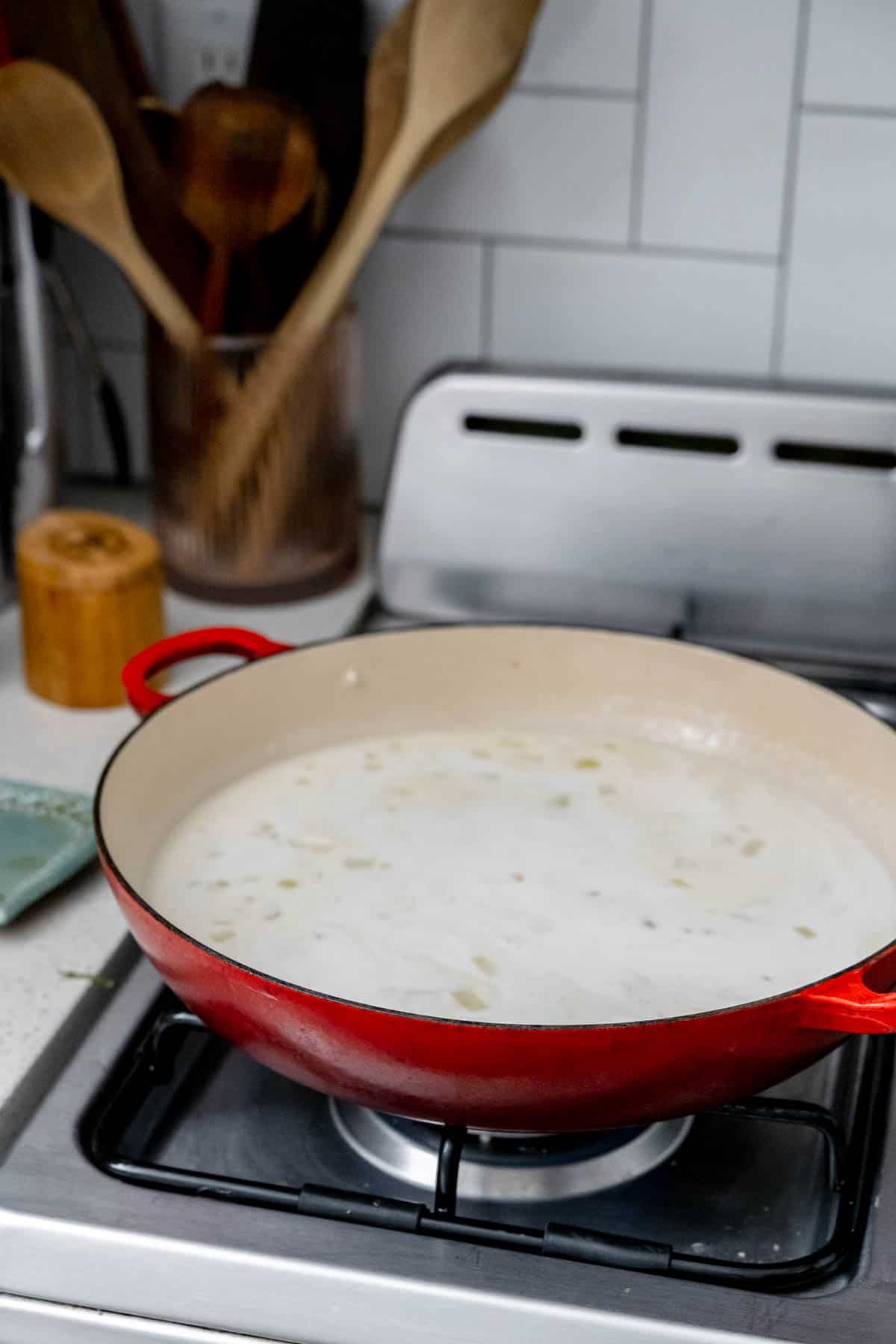
- Add the coconut milk: Pour in the coconut milk and add 1 tablespoon fish sauce and ¼ teaspoon black pepper. Stir to combine and bring to a gentle simmer over medium low heat. You want a simmer, not a boil.
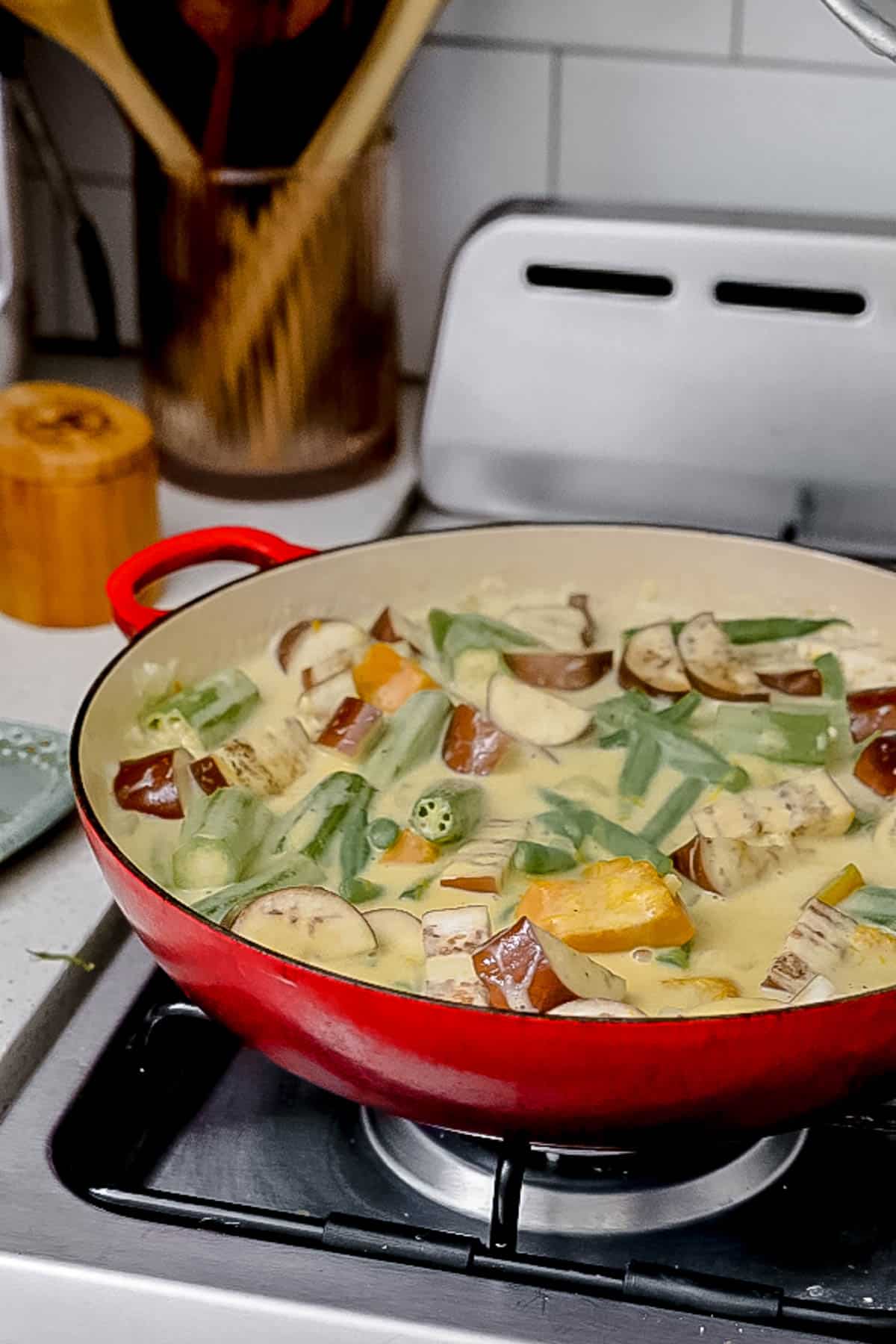
- Cook the vegetables and shrimp: Add the kabocha squash to the simmering coconut milk and cook for 7 minutes, until it's just starting to turn tender. Then add the green beans and okra and cook for 3 minutes. Then add the Chinese eggplant and cook for another 10 minutes. Add the shrimp and cook for 3 to 4 minutes, until the shrimps turn pink and are cooked through.
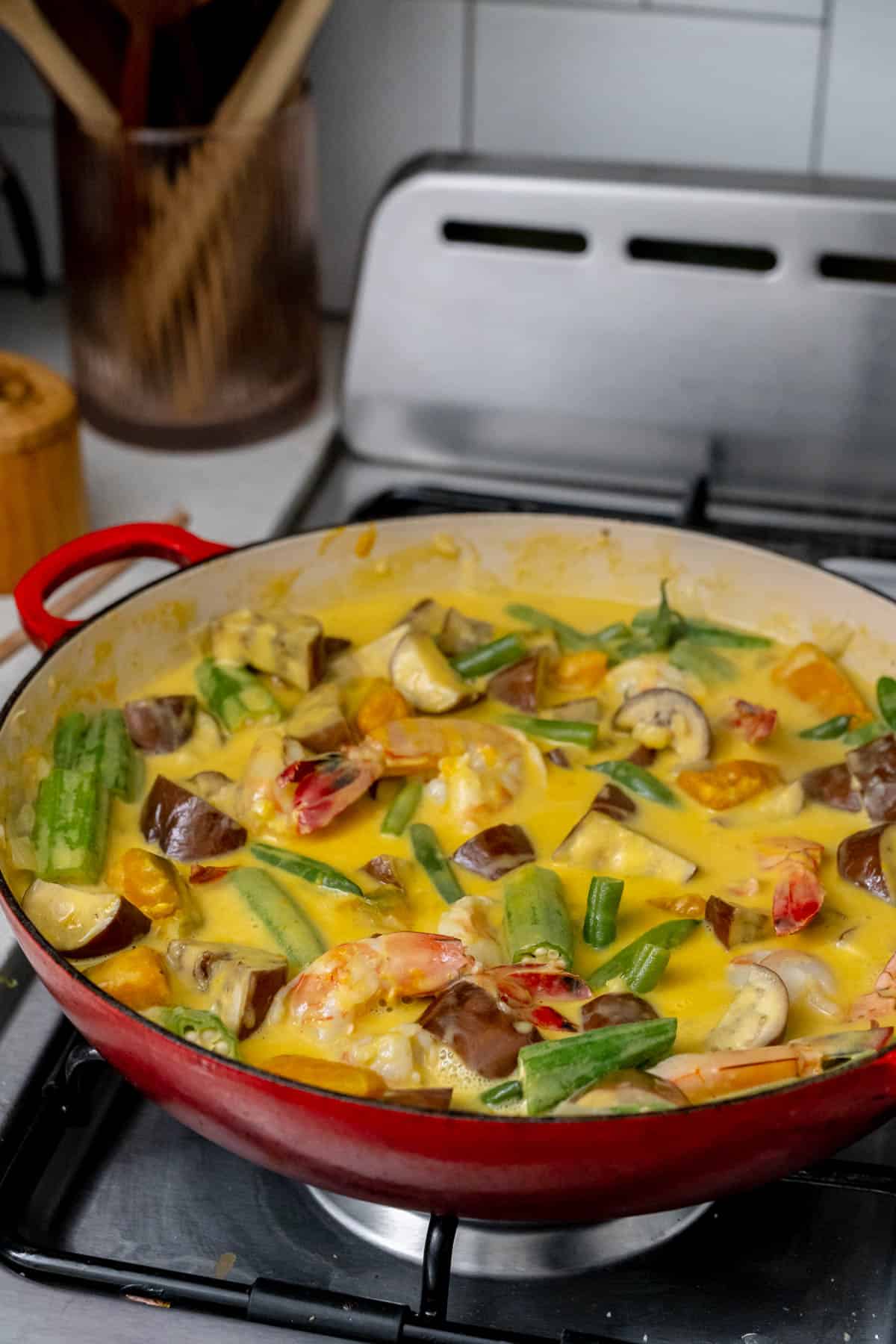
- Taste and serve: Taste the sauce and adjust with more fish sauce, salt, or pepper as needed. Serve right away over steamed white rice.
Make it Your Own
- Make it vegetarian: Skip the shrimp and swap the fish sauce for soy sauce or add in some miso paste for more umami.
- Add/remove vegetables: Don't like eggplant or okra? Swap it for something else or omit completely.
- Make it spicy: Simmer a long green pepper in the coconut milk from the start for a mild Bicol style warmth. For more heat, add a bird's eye chili.
- Use a different protein: Sliced pork belly is also an option here.
- Add bagoong: If you want a more traditional Bicol style version, add a tablespoon of bagoong alamang (fermented shrimp paste) to the aromatics and skip the fish sauce. It adds a savory and funky flavor.
Isabelle's Tips
- Stagger cooking the vegetables: Kabocha needs the most time, beans and okra are in the middle, and eggplant goes in last. Follow the order in the recipe and every vegetable will be properly cooked when you serve it.
- Don't overcook the shrimp: Add the shrimp last and let it poach gently in the sauce. It should turn pink in 3 to 4 minutes. Pull it off the heat as soon as it does.
- Season at the end: Fish sauce saltiness varies a lot by brand. Add 1 tablespoon at the start, cook the dish through, then taste before adding more.
- Storage: Store in refrigerator for up to 4 days and reheat in the microwave or on the stove top.

Did you try this recipe?
Would love to hear what you think by leaving a comment below and sharing it on Instagram, Facebook, or Pinterest!
Thanks so much!
Isabelle
Ginataang Gulay (Filipino Vegetables in Coconut Milk Stew)
Equipment
- 1 large skillet or wide pan (12-inch)
- 1 wooden spoon or spatula
Ingredients
- 1 tablespoon avocado oil
- 1 onion diced
- 4 garlic cloves minced
- 1 tablespoon fresh ginger chopped
- 2 cups coconut milk
- 1 tablespoon fish sauce plus more to taste
- ¼ teaspoon black pepper plus more to taste
- 12 oz kabocha squash peeled and cubed into 1 to 1½ inch pieces (about 2 cups)
- 6 oz green beans trimmed and cut into 2-inch pieces (about 1½ cups)
- 6 oz okra trimmed (about 1½ cups)
- 10 oz Chinese eggplant cut into 1-inch pieces (about 2 cups)
- ½ lb shrimp peeled and deveined
Instructions
- Sauté the aromatics: Heat a large skillet over medium heat and add the avocado oil. Once hot, add the garlic, onion, and ginger. Cook for 5 to 7 minutes, stirring occasionally, until the onion is slightly translucent and everything smells fragrant.
- Add the coconut milk: Pour in the coconut milk and add 1 tablespoon fish sauce and ¼ teaspoon black pepper. Stir to combine and bring to a gentle simmer over medium low heat. You want a simmer, not a boil.
- Cook the vegetables and shrimp: Add the kabocha squash to the simmering coconut milk and cook for 7 minutes, until it's just starting to turn tender. Then add the green beans and okra and cook for 3 minutes. Then add the Chinese eggplant and cook for another 10 minutes. Add the shrimp and cook for 3 to 4 minutes, until the shrimps turn pink and are cooked through.
- Taste and serve: Taste the sauce and adjust with more fish sauce, salt, or pepper as needed. Serve right away over steamed white rice.
Save This Recipe! 💌
Notes
- Stagger cooking the vegetables: Kabocha needs the most time, beans and okra are in the middle, and eggplant goes in last. Follow the order in the recipe and every vegetable will be properly cooked when you serve it.
- Don't overcook the shrimp: Add the shrimp last and let it poach gently in the sauce. It should turn pink in 3 to 4 minutes. Pull it off the heat as soon as it does.
- Season at the end: Fish sauce saltiness varies a lot by brand. Add 1 tablespoon at the start, cook the dish through, then taste before adding more. Storage: Store in refrigerator for up to 4 days and reheat in the microwave or on the stove top.
- Storage: Store in refrigerator for up to 4 days and reheat in the microwave or on the stove top.


Rodrigo Cruz says
Made this the other night. Loved it! So easy to make. Gonna be in the monthly rotation for sure! I kept the shrimp shells on to extract more flavor. But still the same recipe 🤌🏼
Thanks again!