
Growing up, Ensaladang Talong (Filipino Eggplant Salad) was always the side dish I'd low key add more of onto my plate. There's something about that combo of smoky eggplant and tangy vinegar that just cuts through the richer main dishes on the table such as adobo, beef salpicao, or garlic fried rice. It's humble, but it does a lot.
I wanted to write this one up because it's one of those Filipino recipes that's genuinely approachable and introduces people to Filipino flavors in a way that really sticks. If you're building your Filipino cooking repertoire or looking for something to add to a spread for guests who are new to the cuisine, this is a good one. And if you love the smoky charred vegetable thing, my charred cabbage with anchovy butter gives you that same energy in a completely different direction.
Save This Recipe! 💌
Jump to:
Notes on Ingredients
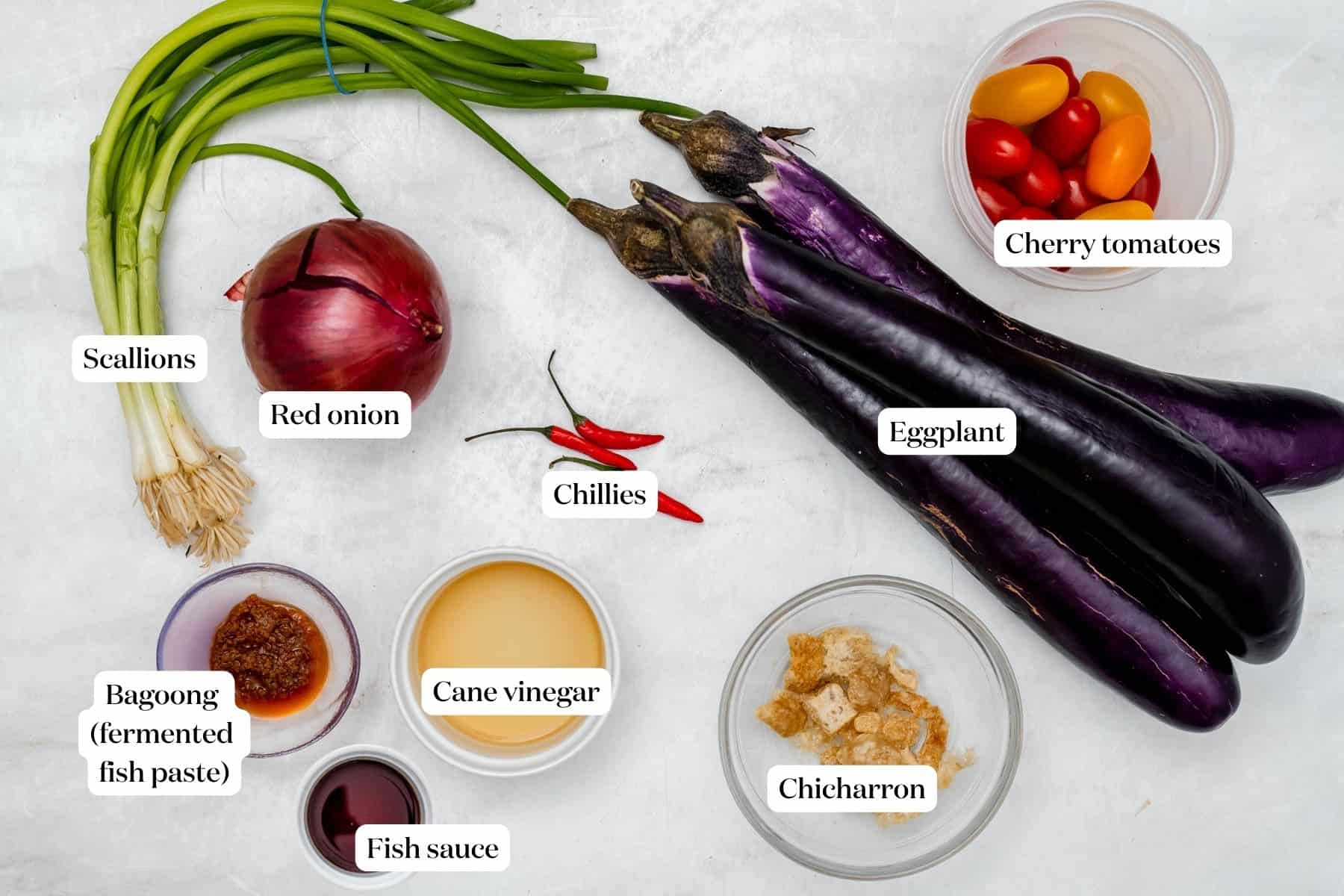
- Chinese or Japanese eggplant - These are the long, slender eggplants and they're the right ones to use here. They char faster, peel more easily, and have a naturally sweeter, less bitter flesh compared to the large globe eggplants. You can find them at most Asian grocery stores and a lot of regular grocery stores too.
- Cherry or grape tomatoes - I use these specifically for two reasons: they're sweeter than regular tomatoes and they look beautiful scattered on top. You can absolutely dice any tomato you have on hand and it'll taste just as good. I just love the way the sliced cherry tomatoes look on the plate.
- Chilies - Completely up to you here. Add more if you love heat, use just one if you want a little kick, or skip them entirely.
- Cane vinegar - This is the more traditional choice and it has a slightly mellower, less sharp flavor than white vinegar. White vinegar works just fine as a substitute.
- Bagoong (fermented shrimp paste) - This is optional but it adds a deep, salty, funky flavor that makes the whole dish more interesting. A little goes a long way. If you can find it at your local Asian market, grab it. If not, the salad is still great without it.
- Chicharron (pork rinds) - This adds a crunch that's so satisfying. Any good chicharron works here. And again this is optional too.
- Other toppings I would add if I had easier access to these ingredients:
- Salted egg - adds that extra funk and saltiness.
- Green mango - adds a sweet and sour element.
*See recipe card below for full list of ingredients and quantities.
How to Make Ensaladang Talong
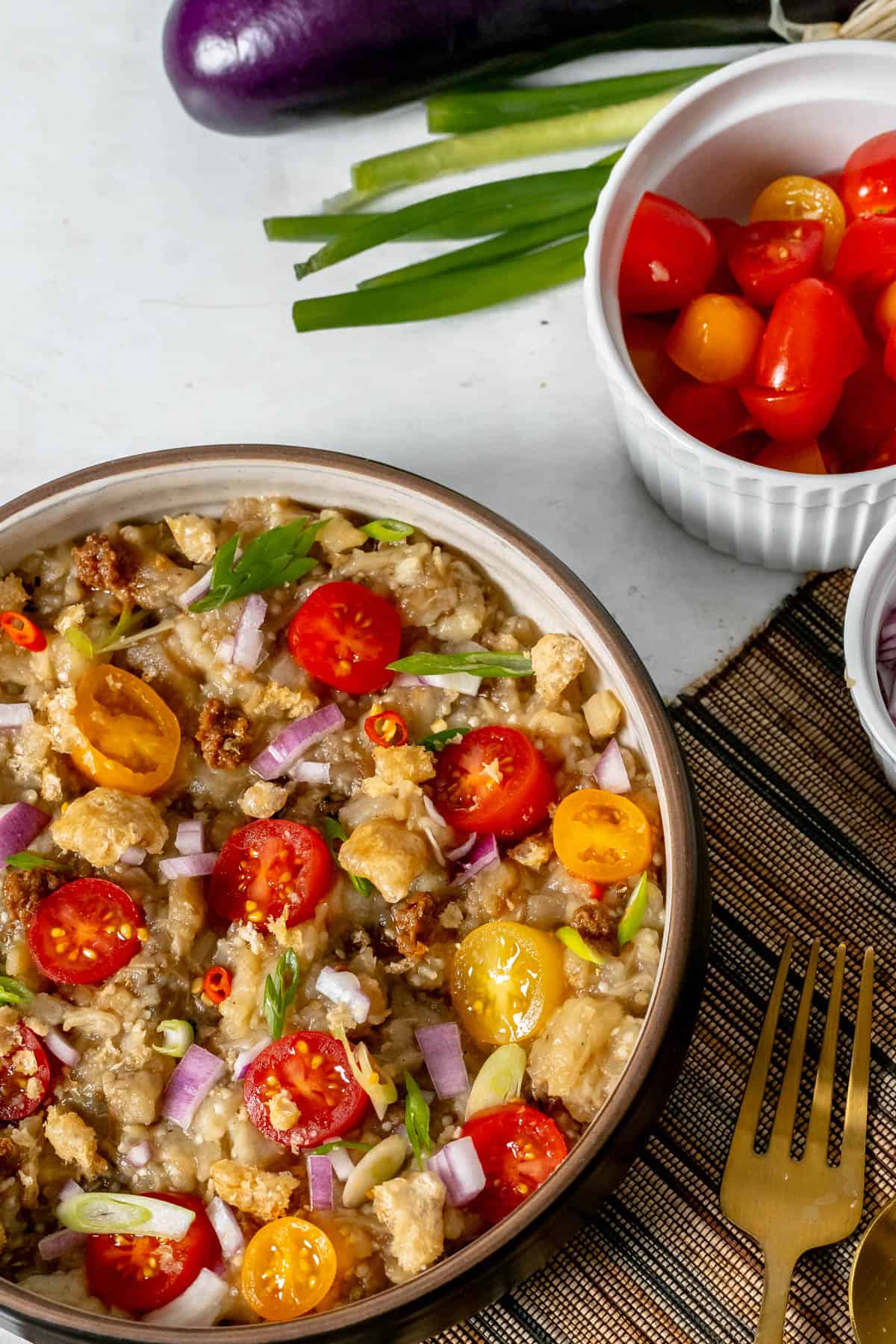
My version is presentation focused. Instead of mixing everything together, I lay the eggplant as the base and use the tomatoes, onion, scallions, chicharron, and bagoong as toppings. It looks beautiful on the table and lets everyone see exactly what's in it. That said, the more traditional way is to mix everything together, and that works just as well. You do you!
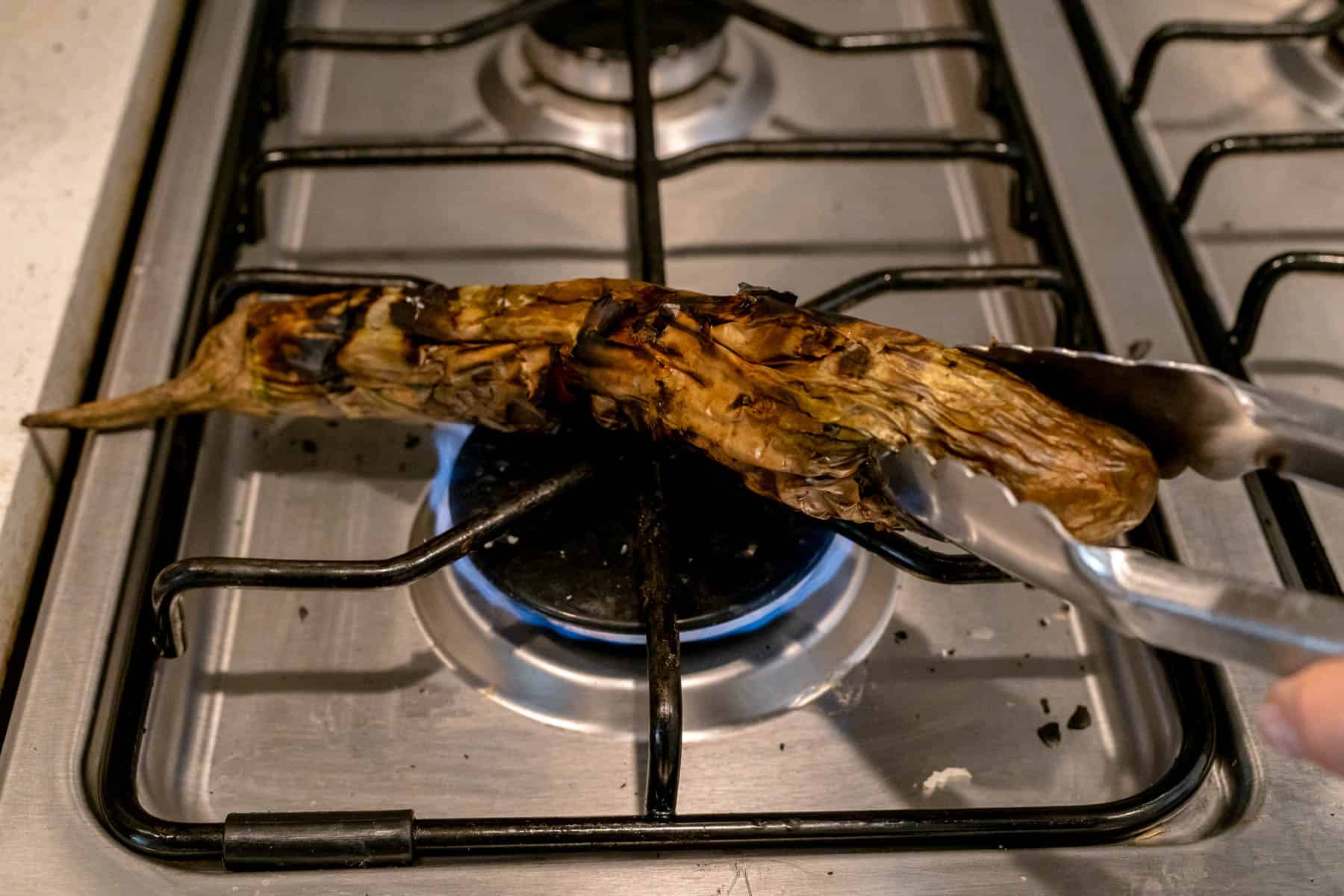
- Char the eggplant: Poke holes in the eggplant with a fork. Place the whole eggplants directly over a gas flame on your stovetop, turning every few minutes with tongs until the skin is completely charred and black on all sides, about 15 minutes total depending on size. The eggplant should feel very soft when you press it gently. No gas stove? Place them on a baking sheet and broil on high, turning every 5 minutes until the skin is blackened, about 20 minutes.
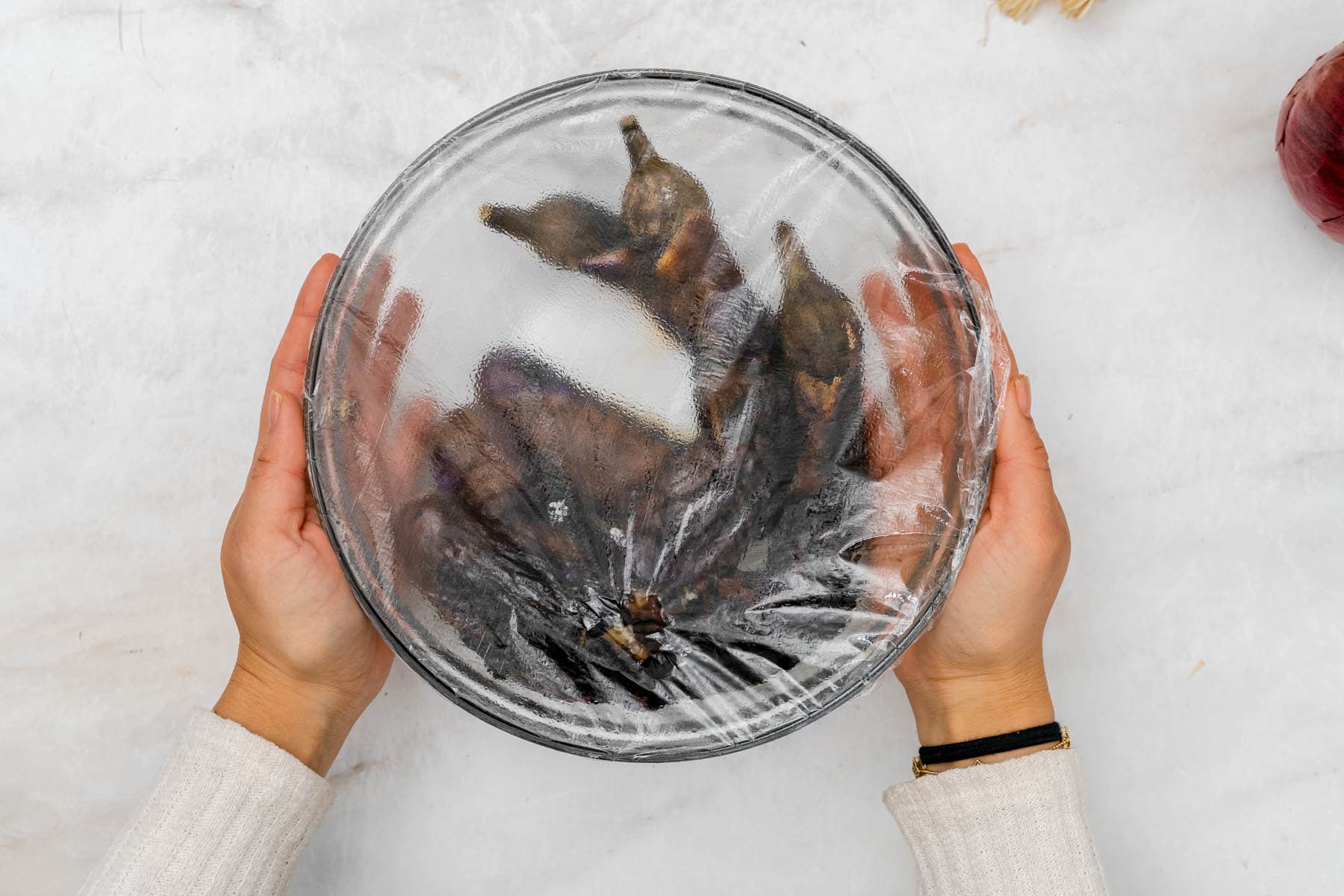
- Steam and peel: Transfer the charred eggplant to a large bowl and cover with a towel or plastic wrap. Let it steam for about 10 minutes. This makes peeling so much easier. Once it's cool enough to handle, peel off the charred skin. It should come right off.
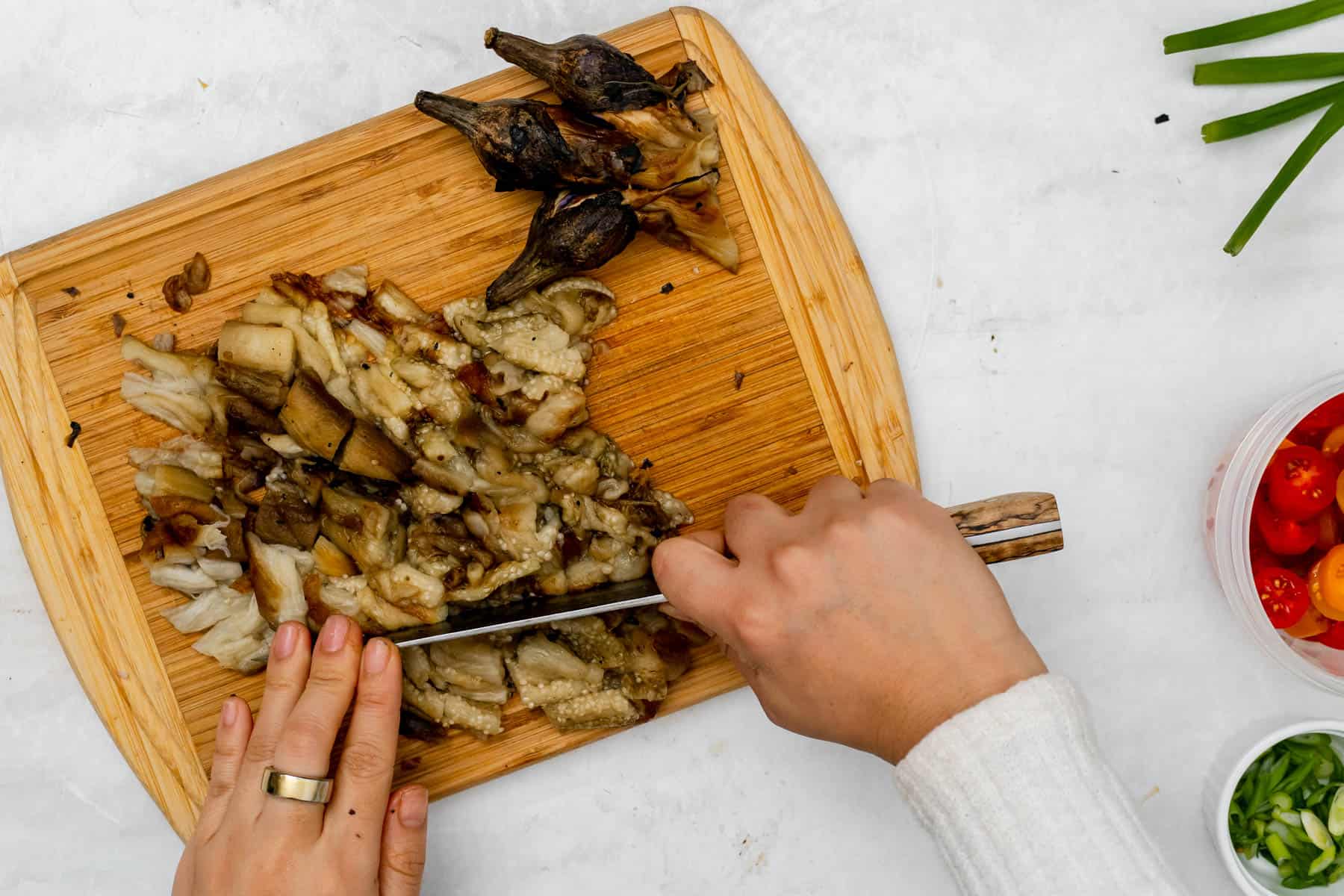
- Chop the eggplant: Chop and discard the top and chop the peeled eggplant into small pieces and place in a medium bowl. Add the vinegar, sliced chilies, and bagoong if using. Mix everything together.
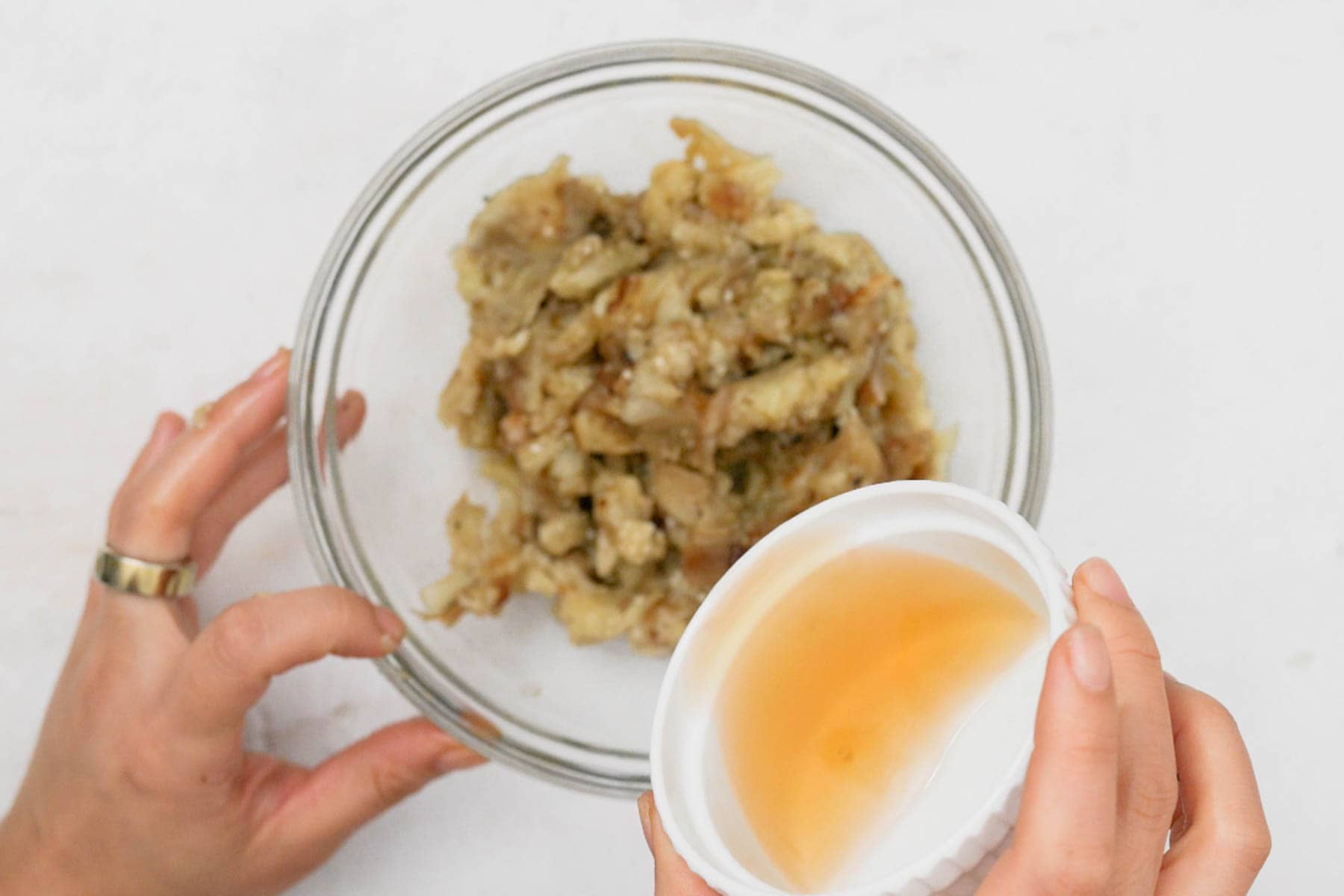
- Add marinade: Add the vinegar, sliced chilies, and bagoong if using. Mix everything together.
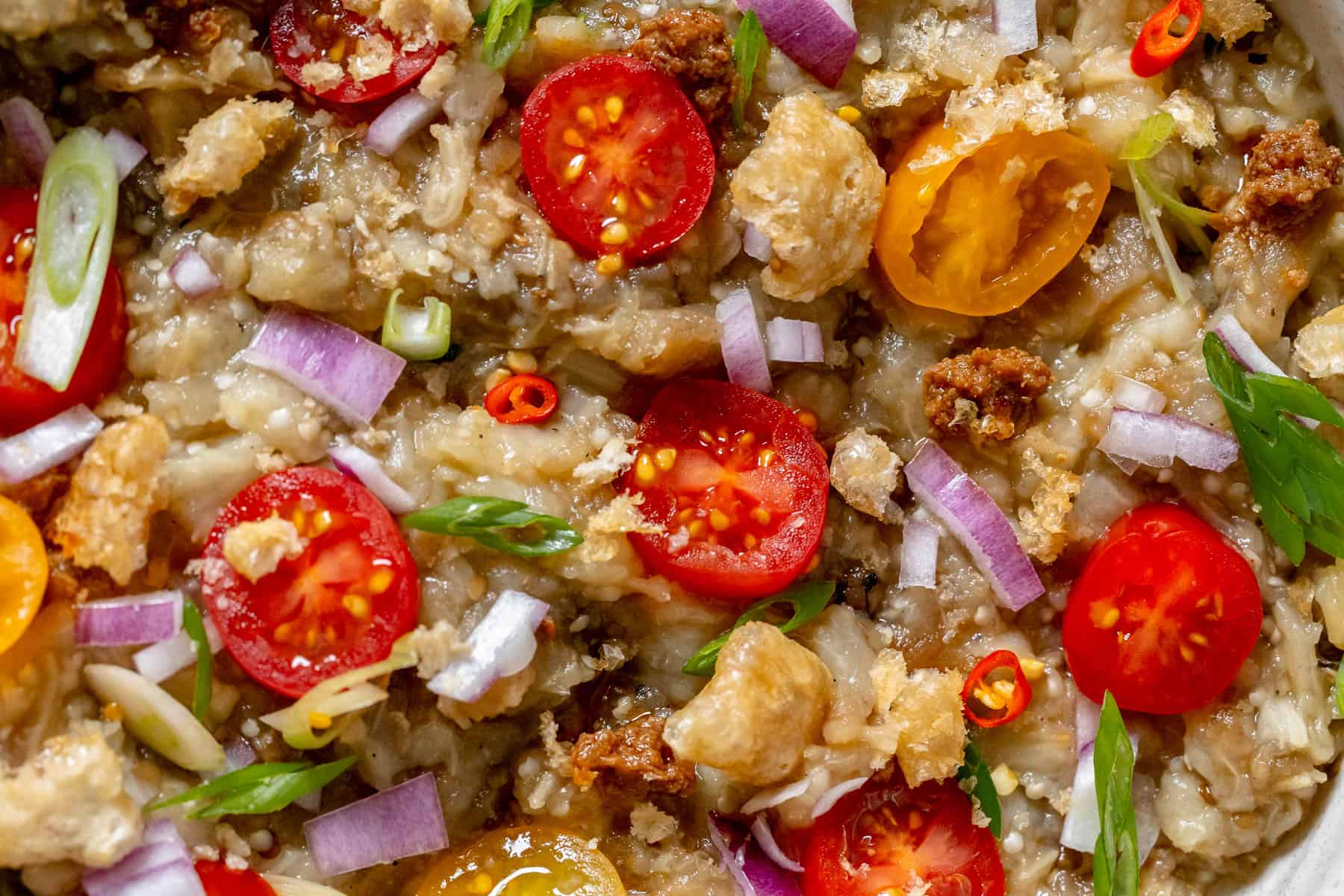
- Assemble: On a shallow plate, spread out the eggplant mixture. Top with sliced cherry tomatoes, diced red onion, sliced scallions, and crushed chicharron. Add small dollops of bagoong on top if you like. Let everything sit for at least 10 minutes before serving so the flavors can come together. If you prefer it cold, pop it in the fridge for 20-30 minutes.
Isabelle's Tips
Don't rush the charring. You want the skin completely black on all sides - not just lightly browned. That full char is what gives the eggplant its deep, smoky flavor. If it's not black all the way around, keep going.
Let it steam before you peel. Covering the hot eggplant right after charring traps the steam inside, which loosens the skin and makes it slip off effortlessly. Skip this step and you'll be fighting with the peel.
Give it time to marinate. Ten minutes is the minimum. The vinegar and seasoning need a few minutes to soak into the eggplant. If you have time to chill it for 20-30 minutes, even better - the flavor gets more developed.
Add the chicharron right before serving. If you add it too early, the crunch will disappear into the salad. Pile it on right before you bring it to the table.
Taste and adjust. Every batch of vinegar and bagoong is a little different in intensity. Taste the dressed eggplant before you plate it and adjust the vinegar or seasoning to your liking. You do you!
Storage
Store leftover ensaladang talong in an airtight container in the fridge for up to 2 days. The eggplant will continue to absorb the vinegar and seasoning as it sits, which actually makes it taste even better the next day. Store the chicharron separately so it doesn't get soggy. Give everything a quick toss before serving.

Did you try this recipe?
Would love to hear what you think by leaving a comment below and sharing it on Instagram, Facebook, or Pinterest!
Thanks so much!
Isabelle

Ensaladang Talong (Filipino Eggplant Salad)
Equipment
- Gas stovetop or broiler
- Serving plate
- Medium bowl
- Plastic wrap or towel
Ingredients
- 3-4 Chinese or Japanese eggplants
- 3 tablespoons cane vinegar or white vinegar
- ½ teaspoon fish sauce
- ½ teaspoon fermented fish paste (bagoong) optional
- 2-3 red or green chilies thinly sliced, optional
- ½ cup cherry or grape tomatoes
- ¼ medium red onion finely diced
- 2 scallions thinly sliced
- ¼ cup crumbled chicharron (pork rinds) for topping, optional
Instructions
- Poke holes in the eggplant with a fork. Place the whole eggplants directly over a gas flame on your stovetop, turning every few minutes with tongs until the skin is completely charred and black on all sides, about 15 minutes total depending on size. The eggplant should feel very soft when you press it gently. No gas stove? Place them on a baking sheet and broil on high, turning every 5 minutes until the skin is blackened, about 15-20 minutes.3-4 Chinese or Japanese eggplants
- Transfer the charred eggplant to a large bowl and cover with a towel or plastic wrap. Let it steam for 5-10 minutes - this makes peeling so much easier. Once it's cool enough to handle, peel off the charred skin. It should come right off.3-4 Chinese or Japanese eggplants
- Chop the peeled eggplant into small pieces and place in a medium bowl.3-4 Chinese or Japanese eggplants
- Add 3 tablespoons vinegar, ½ teaspoon fish sauce, sliced chilies, and ½ teaspoon of bagoong if using. Mix everything together.3 tablespoons cane vinegar , ½ teaspoon fermented fish paste (bagoong), 2-3 red or green chilies, ½ teaspoon fish sauce
- On a shallow plate, spread out the eggplant mixture. Top with cherry tomatoes, red onion, scallions, and crushed chicharron. Add small dollops of bagoong on top if you like. Let everything sit for at least 10 minutes before serving so the flavors can come together. If you prefer it cold, pop it in the fridge for 20-30 minutes.½ cup cherry or grape tomatoes, ¼ medium red onion, 2 scallions, ¼ cup crumbled chicharron (pork rinds)


Leave a star rating and review, ask a question, or share a tip!